Cooking-Line Surfaces
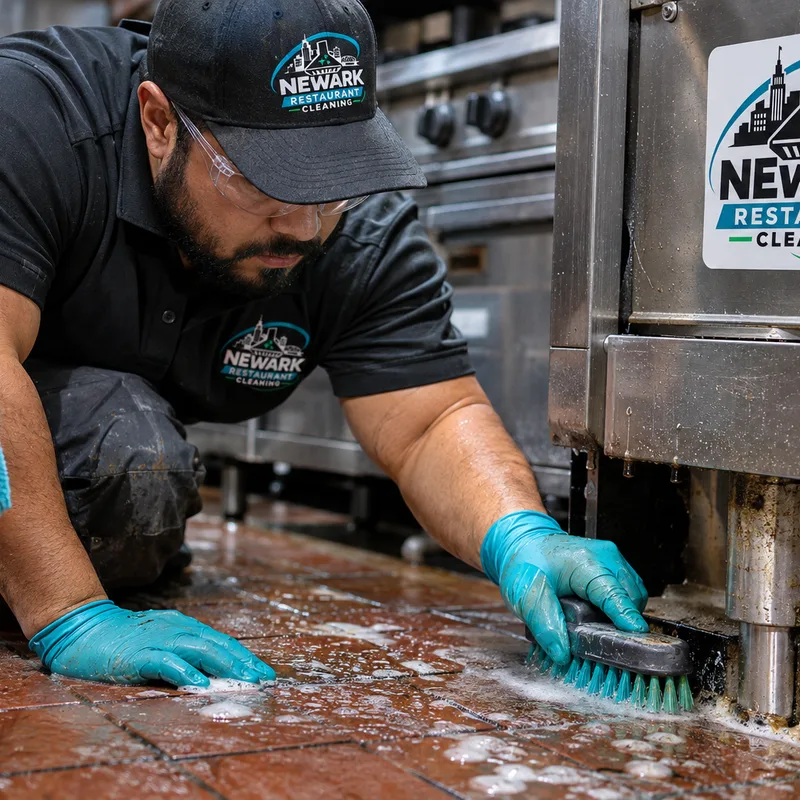
Degreasing focuses on accessible exteriors, splash zones, equipment sides, legs, casters, and the residue that collects between units. Products and dwell times are selected for the surface and soil.
Serving Newark, New Jersey & surrounding areas
Bayonne Restaurant Kitchen Service
Remove stubborn grease, restore hard-working floors, and prepare your commercial kitchen for a cleaner, safer shift.
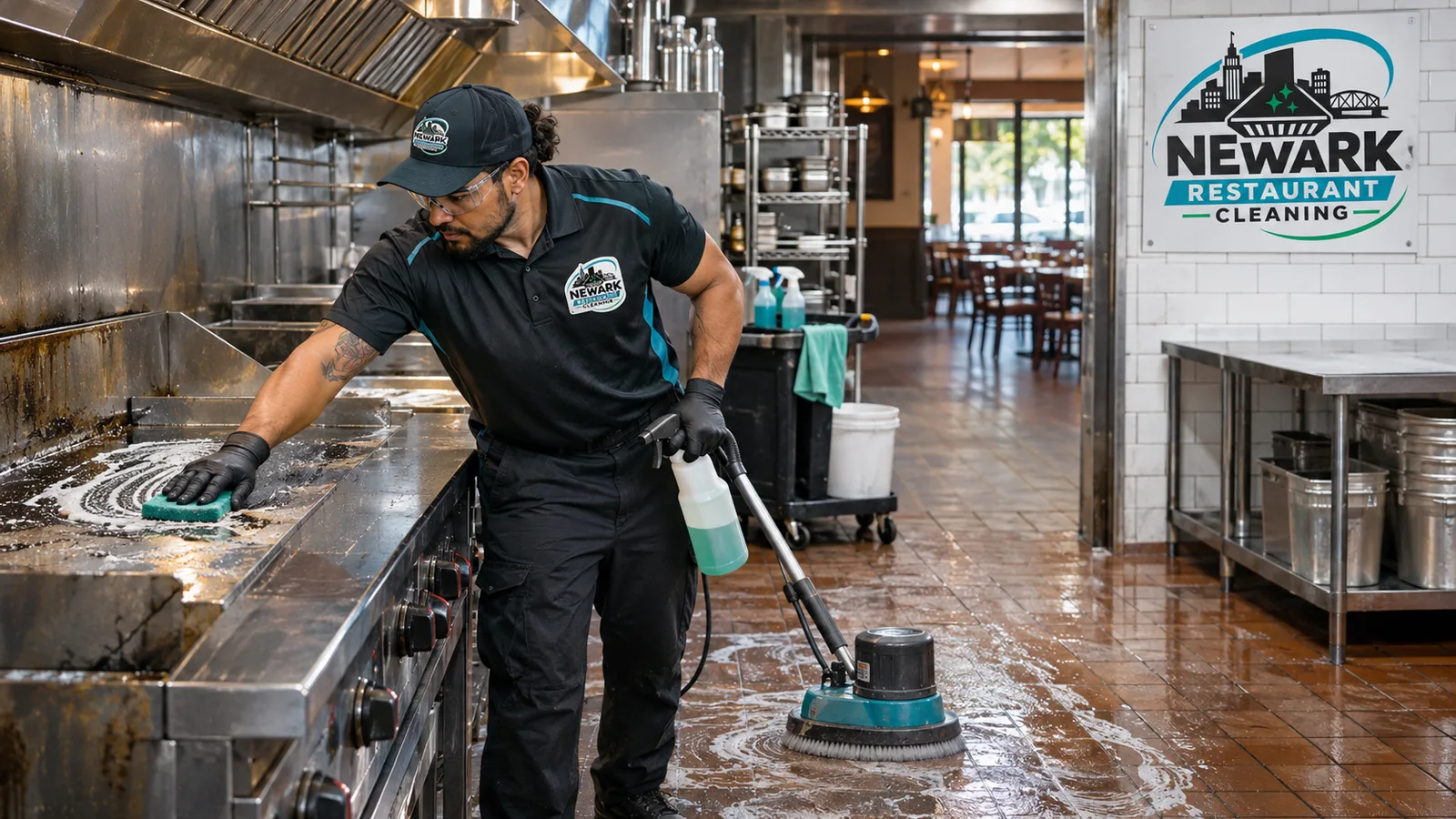
Restaurant Kitchen Deep Cleaning Bayonne targets the grease, food residue, carbon deposits, and soil that routine closing duties leave behind. Newark Restaurant Cleaning develops the scope around your equipment, floor type, access, and operating schedule rather than applying one checklist to every kitchen.
The work can cover cooking-line exteriors, equipment sides and legs, stainless steel preparation surfaces, sinks, wall panels, baseboards, shelving, floor edges, and accessible areas beneath movable equipment. High-contact points such as handles and switches can also be cleaned when they are included in the agreed scope. Exhaust-hood interior cleaning, ductwork, pest control, and equipment repair are separate specialties and should be assigned to qualified providers when needed.
Working as an experienced restaurant team in Newark, we understand that commercial cleaning has to fit around food preparation, deliveries, closing duties, and reopening. Before work begins, we review the kitchen, identify sensitive equipment and confirm which items staff will empty, disconnect, or move. You receive a defined plan instead of assumptions made during the shift.
Cleaning Coverage
Degreasing focuses on accessible exteriors, splash zones, equipment sides, legs, casters, and the residue that collects between units. Products and dwell times are selected for the surface and soil.
Stainless steel tables, sink surrounds, shelving, wall panels, and washable preparation surfaces are cleaned with attention to seams, corners, and contact points.
Floor-wall junctions, baseboards, kick plates, corners, and accessible spaces beneath movable equipment receive the detail work that daily mopping often misses.
Loose debris and heavy soil are removed before washing. Where sanitizing is included, surfaces are first cleaned and the sanitizer is used according to its label, including the required contact time.
Commercial Floor Care
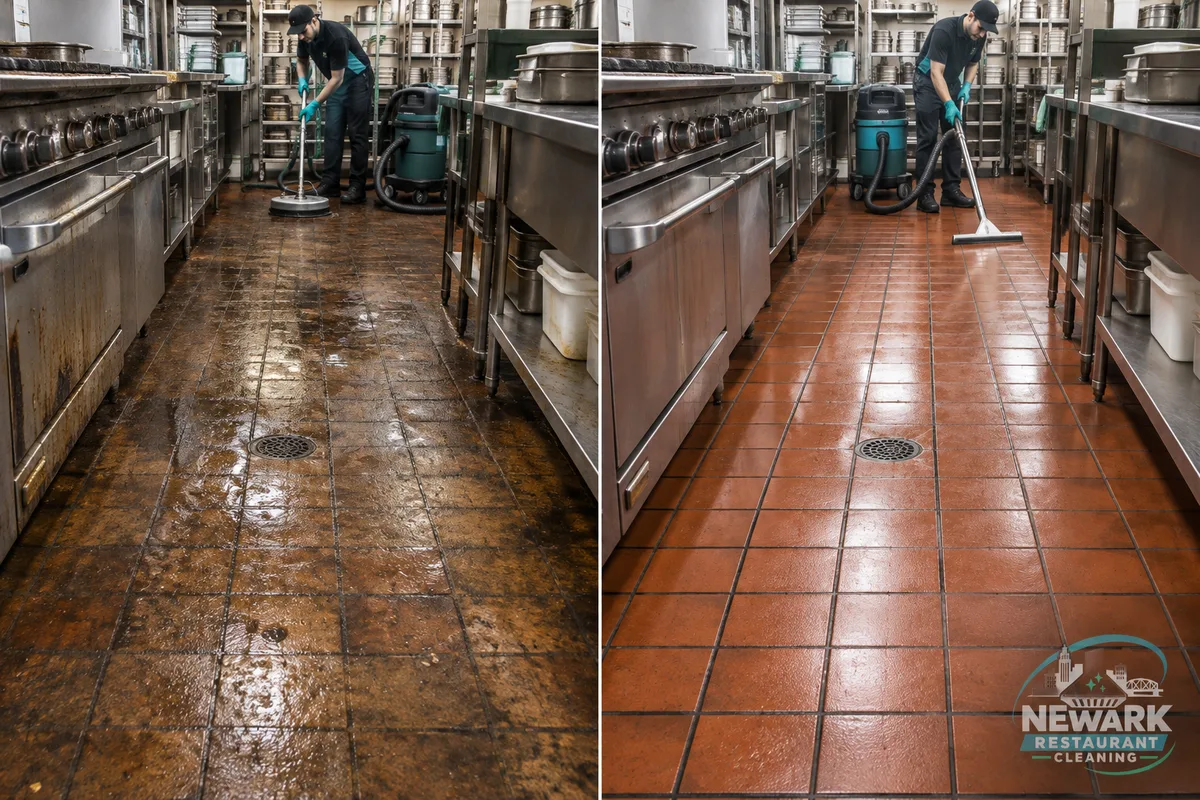
Restaurant Floor Cleaning Bayonne begins with the floor material and the way the kitchen uses it. Quarry tile and ceramic tile can hold greasy soil in grout lines and textured surfaces. Sealed concrete and resilient flooring need compatible chemistry and controlled agitation to avoid harming the finish or adhesive. A walkthrough identifies damaged grout, loose tiles, failing sealers, and areas where standing water may limit the result.
The basic sequence is dry soil removal, degreaser application, dwell time, mechanical agitation, recovery of the dirty solution, rinsing, and drying. Edges, corners, floor drains, and spaces beneath accessible equipment need separate attention because a machine cannot reach every spot. Dirty solution should be recovered rather than pushed into an unsuitable drain.
Bayonne's commercial corridors along Broadway include restaurants with compact back-of-house layouts, so access and equipment movement often shape the work plan. Near Route 440, kitchens serving vehicle-oriented commercial areas may contend with tracked grit as well as cooking grease. Cold, wet winter conditions in North Jersey can add salt and moisture at entrances, making planned floor care useful before tracked debris reaches kitchen traffic lanes.
Cleaning Process
We review the cooking line, preparation areas, floors, drains, access points, and operating constraints. The walkthrough also identifies fragile finishes, heavy carbon deposits, and items that need special handling.
The written scope states what will be cleaned, what is excluded, which equipment may be moved, and what restaurant staff must empty or shut down. Timing is planned around the available service window.
Food, utensils, smallwares, paper goods, and exposed ingredients must be removed or securely protected. Sensitive controls and electrical components are kept dry, and loose debris is collected before wet cleaning.
Cleaning products are applied according to surface compatibility and label directions. Technicians allow suitable dwell time, agitate stubborn soil, hand-detail tight areas, and repeat treatment where buildup requires it.
Residue and dirty solution are removed, floors are left to dry, and the completed areas are checked against the agreed scope. Any damage or buildup that cleaning cannot correct is documented for the restaurant.
Bayonne Scheduling
A useful cleaning plan accounts for the restaurant's busiest periods, shutdown procedures, and the time surfaces need to dry before employees return. An overnight service window may suit a dinner operation, while a business that opens early may need work split into controlled phases. We discuss timing before quoting because a narrow access window can affect crew size and equipment choices.
Restaurants near Constable Hook may operate around industrial traffic and delivery schedules, which makes loading access and arrival timing part of the plan. In Bergen Point, older mixed-use blocks can mean tighter service entrances or limited staging space. These conditions do not prevent a thorough cleaning, but they should be addressed before hoses, floor machines, and recovery equipment arrive.
Deep cleaning supports the restaurant's routine sanitation program; it does not replace it. Managers still need daily procedures for spills, food-contact surfaces, waste handling, and floors. The best maintenance interval depends on menu, cooking volume, ventilation, floor texture, and how quickly grease returns around fryers, ranges, and traffic lanes.
Bayonne Pricing Factors
Restaurant kitchen deep cleaning in Bayonne typically ranges from about $700 to $2,500, while large kitchens, heavy buildup, or multi-shift projects may cost more. A smaller kitchen with open access usually falls near the lower end; extensive equipment detailing and floor restoration increase labor.
Final price depends on square footage, grease and carbon levels, floor material, equipment movement, parking or loading access, and the available work window. Hood ducts, repairs, and pest remediation are separate. The exact cost is confirmed after a walkthrough and written scope.
Practical Questions
A compact commercial kitchen may be completed within one service window, while a larger kitchen or heavy buildup can require a longer visit or phased work. Cooking-line density, movable equipment, floor condition, loading access, and required drying time determine the schedule. Kitchens with tight rear access along older Broadway or Bergen Point properties may require extra setup time.
Yes, service can be planned around a restaurant's closed hours when crew access and enough drying time are available. The opening time, alarm procedure, key access, equipment shutdown, and staff handoff should be confirmed in advance. Overnight work must still leave enough time for review before food preparation resumes.
Staff should remove or protect food, utensils, smallwares, paper products, and personal items from the agreed work areas. Refrigerated ingredients should remain in approved storage, and restaurant management should handle equipment shutdowns unless another arrangement is documented. Clear aisles and an identified water source also help the work begin on schedule.
Accessible areas beneath equipment can be cleaned when the equipment can be moved safely and movement is included in the scope. Gas-connected, hardwired, plumbed, excessively heavy, or unstable units generally require qualified handling and may remain in place. The walkthrough identifies what can be moved without risking a utility connection or damaging the floor.
Professional floor cleaning removes bonded grease and embedded soil, but it cannot guarantee removal of permanent stains, worn finishes, damaged grout, or discoloration absorbed into porous material. A test area can help distinguish removable soil from physical damage. Cracked tiles, missing grout, and failed coatings should be repaired separately.
The interval should be based on soil accumulation rather than a fixed calendar for every restaurant. Frying volume, operating hours, foot traffic, ventilation performance, grout texture, and daily mopping practices all affect how quickly buildup returns. North Jersey winter moisture and tracked salt can also justify more frequent attention to entrances and connected traffic lanes.
Exhaust-hood interiors, filters, fans, and duct systems are separate from a general kitchen deep-cleaning scope unless they are specifically inspected and assigned to a qualified exhaust-cleaning provider. General cleaning may address accessible exterior hood surfaces. The written scope should clearly separate exterior degreasing from fire-safety cleaning inside the exhaust system.
Tell Newark Restaurant Cleaning about your kitchen layout, floor material, operating hours, and problem areas. We will use those details to prepare a practical scope and service plan for your Bayonne restaurant.
Talk With Our Team
Tell us about your space, schedule, and cleaning priorities. We will help define a practical scope for your restaurant.
Request a Quote
After you submit the form, our team will review your details and contact you to discuss the property and next steps.