Newark Restaurant Cleaning

Restaurant Cleaning Services

Detailed cleaning for dining rooms, bars, restrooms, floors, and back-of-house work areas, scheduled around your operating hours.

✓ Dining, bar, and restroom care
✓ Written, room-by-room scope
✓ Scheduled around operating hours
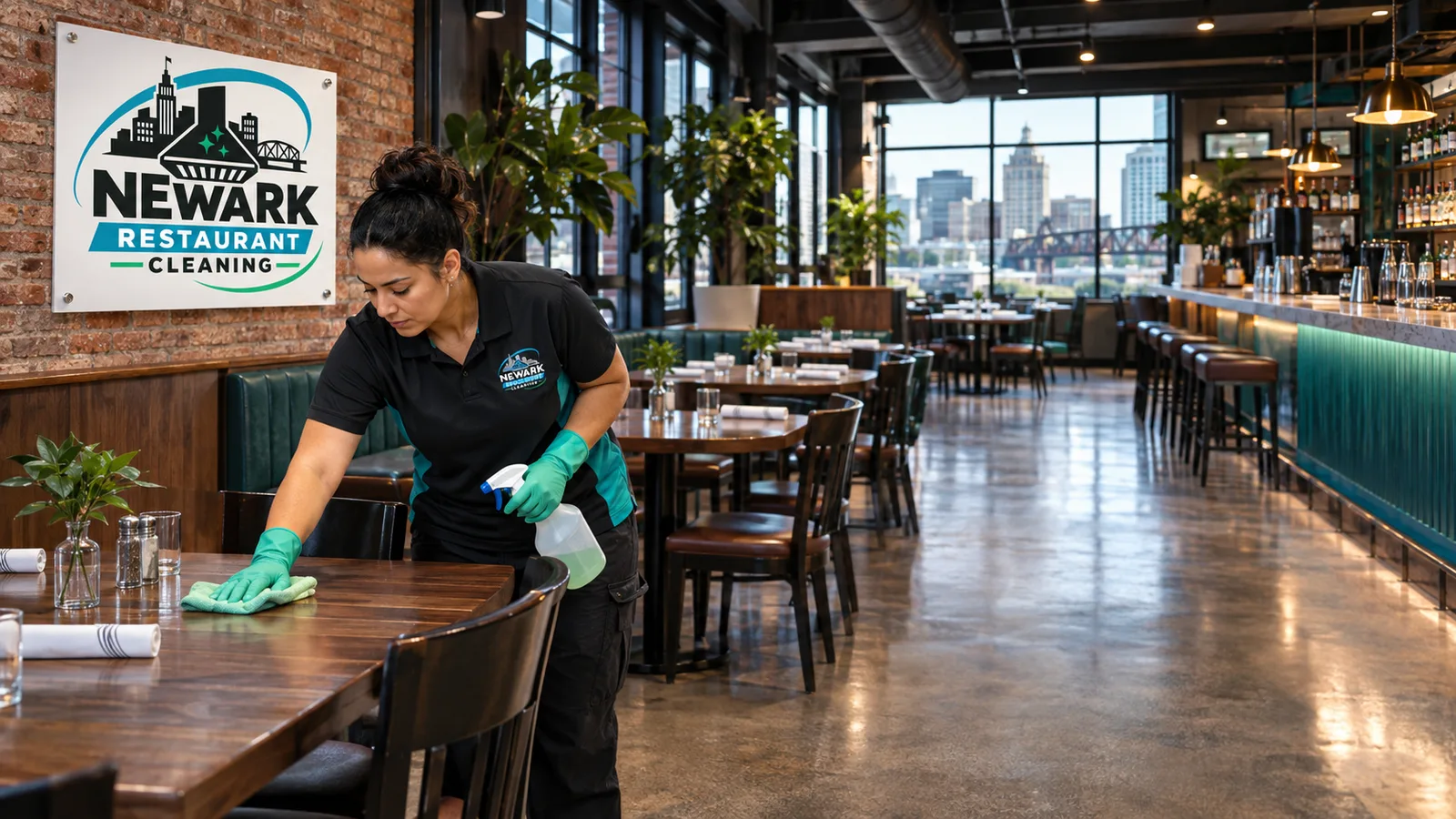
A professional cleaner preparing a Newark restaurant dining room before opening, with clean tables, polished floors, and an orderly bar visible

Restaurant-Specific Scope

A Cleaning Plan Built Around Your Restaurant

Restaurant Cleaning Services should support daily operations without getting in the way of staff, deliveries, or guests. Newark Restaurant Cleaning develops a written scope around your floor plan, hours, traffic, surfaces, and problem areas. The work can cover customer-facing spaces, staff areas, high surfaces, and floors under one coordinated schedule.

Our restaurant specialists serving Newark, NJ clean during agreed service windows and follow task lists suited to each part of the building. A dining room needs careful attention to table bases, ledges, upholstery edges, and visible glass. A bar has sticky residue, splash zones, rails, stools, and equipment exteriors. Restrooms and back-of-house areas require separate tools and procedures to reduce cross-contamination.

Newark restaurants also contend with street grit, rain, winter salt, and heavy foot traffic. Entry mats capture some soil, but fine particles still reach corners, grout lines, and floor edges. A practical plan accounts for these conditions rather than treating every visit as an identical surface wipe.
Complete Cleaning Coverage

Restaurant Cleaning Services for Every Work Zone

Restaurant Dining Room Cleaning

Dining area cleaning addresses tabletops, chair legs, booth edges, partitions, sills, baseboards, reachable fixtures, and debris beneath furniture. The scope can be organized around movable and fixed seating so visible soil does not collect along edges.

Restaurant Bar Cleaning

Bar cleaning covers counters, fronts, rails, shelving exteriors, stools, footrests, mirrors, and accessible surfaces around service equipment. Products and methods are selected for stainless steel, sealed wood, glass, tile, and other finish materials.

Restaurant Restroom Cleaning Newark

Restrooms receive separate color-coded tools where specified, plus cleaning of toilets, urinals, sinks, partitions, dispensers, mirrors, touchpoints, and floors. Supplies can be checked and replenished from the restaurant's on-site stock when included in the scope.

Restaurant Floor Cleaning

Floor care may include vacuuming, sweeping, damp mopping, machine scrubbing, spot treatment, and edge work according to the surface. Ceramic tile, quarry tile, resilient flooring, sealed concrete, and carpet each require a suitable method.

Front Of House Cleaning

Entrances, host stations, waiting areas, dining spaces, bars, and guest corridors are cleaned with presentation in mind. Fingerprints, crumbs, dust, drink residue, and tracked-in soil receive close attention before guests arrive.

Restaurant Back Of House Cleaning Newark

Back-of-house scopes can address employee areas, dry-storage floors, corridors, washable wall surfaces, floor edges, and equipment exteriors. Production equipment interiors, grease systems, and exhaust systems require specific authorization and are not assumed to be part of routine cleaning.

Elevated Surface Care

High Dusting for Overlooked Surfaces

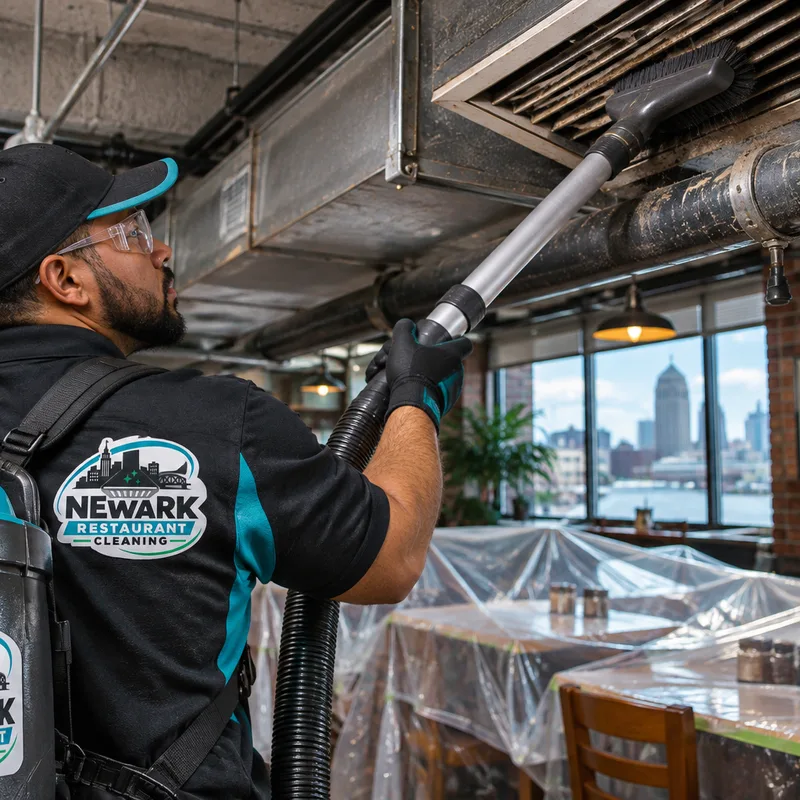
A trained restaurant cleaner using an extension vacuum tool to remove dust from an elevated vent and exposed pipe while dining surfaces remain protected

High dusting removes buildup from elevated, accessible surfaces such as vents, pipes, conduit, ledges, light exteriors, ceiling-fan blades, wall décor, and the tops of partitions or cabinets. These areas can shed dust onto tables, bars, and floors if they are omitted from the cleaning cycle.

The first visit should identify surface height, access limits, nearby food-contact areas, and fixtures that require power isolation or special handling. Extension tools and high-efficiency filtered vacuums can capture dry dust instead of pushing it into the room. Ladders are used only where access and working conditions allow safe setup. Sensitive alarms, sprinklers, exposed food, and fragile décor are handled according to the agreed scope.

Frequency depends on air movement, cooking residue, ceiling configuration, and visible accumulation. High dusting may be rotated through zones rather than performed throughout the restaurant during every visit. That approach controls buildup while keeping the recurring schedule practical.

Zone-Specific Methods

Front and Back of House Need Different Methods

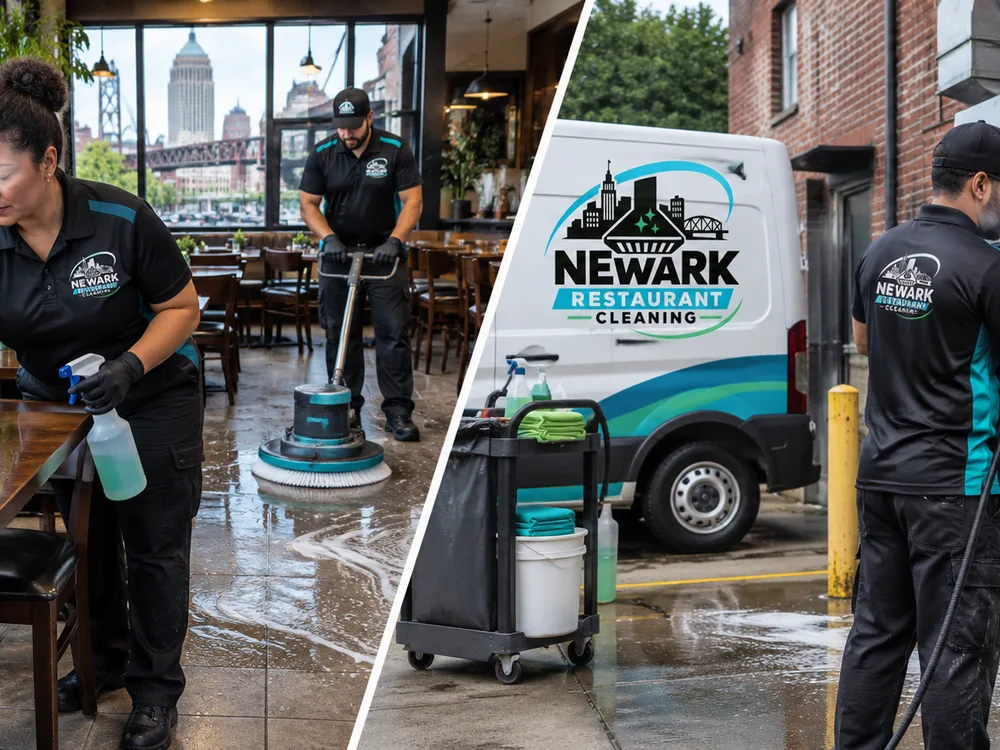
A split-view restaurant scene showing careful front-of-house table and floor cleaning on one side and organized back-of-house floor and equipment-exterior cleaning on the other

Restaurant Front Of House Cleaning Newark prioritizes presentation and guest touchpoints. Crews work carefully around finished wood, upholstery, decorative fixtures, glass, and polished metal. Chairs and light movable items may be repositioned when included, allowing access to crumbs and residue along table bases and booth edges.

Back-of-house cleaning deals with heavier soil and tighter working areas. Degreasing products need the correct dilution, dwell time, agitation, and rinse procedure for the target surface. Tools used near restrooms should not move into dining or food-preparation areas. Clear tool separation and a defined work sequence help control that risk.

Cleaning is distinct from sanitizing. Cleaning removes soil that can interfere with a sanitizer. When sanitizing food-contact surfaces is included, the product must be appropriate for that use and applied according to its label, including concentration and contact time. Restaurant management remains responsible for its food-safety plan and regulatory obligations. Newark establishments operate under applicable requirements enforced by local and state authorities, so a cleaning scope should support, rather than replace, the restaurant's own procedures.

Cleaning Process

How the Cleaning Program Is Set Up

  1. 01

    Walk Through the Restaurant

    We review entrances, seating areas, bar surfaces, restrooms, floors, staff spaces, storage access, and back-of-house work zones. The walkthrough identifies finishes, access restrictions, recurring soil, and areas that require special products or equipment.

  2. 02

    Define Tasks and Service Windows

    The written scope separates routine tasks from periodic work such as high dusting or machine floor care. Scheduling is coordinated around closing, opening, deliveries, events, and any building access requirements.

  3. 03

    Prepare Tools by Cleaning Zone

    Crews organize products, floor equipment, microfiber cloths, and restroom tools before work begins. Product labels, dilution instructions, surface compatibility, and required dwell times guide the method used.

  4. 04

    Clean in a Controlled Sequence

    Work generally moves from higher surfaces to lower ones and from cleaner zones toward heavier-soil zones. Floors are completed after elevated dust and surface debris have been removed.

  5. 05

    Record Issues and Adjust the Scope

    Damage, leaks, unusual buildup, access problems, or depleted supplies can be reported to the designated restaurant contact. The task list can then be adjusted when traffic, hours, or the floor plan changes.

Material-Specific Floor Care

Restaurant Floor Cleaning That Matches the Material

A floor can look dull even after mopping when greasy film, salt residue, compacted soil, or dirty grout remains. Effective restaurant floor cleaning starts with dry soil removal. Loose grit can scratch finished surfaces and turn mop water into slurry if it is not collected first.

Quarry and ceramic tile often need attention at grout lines and floor edges. Resilient floors require products that will not leave a sticky film or damage the finish. Carpeted dining areas benefit from thorough vacuuming and planned spot treatment, with periodic extraction considered according to the carpet's condition and manufacturer guidance. Wood and laminate surfaces require controlled moisture.

Slip risk must also be managed during service. Wet-floor signs and controlled access are basic precautions, while correct dilution and rinsing help prevent detergent residue. In Ironbound dining rooms, where restaurants may have closely arranged tables and busy evening service, the cleaning window and furniture plan matter as much as the machine selected. Downtown locations near offices and event destinations may experience concentrated entry traffic, while restaurants around University Heights can face schedules shaped by classes and campus activity. Along Ferry Street and other active commercial corridors, frequent door use can increase tracked-in grit and moisture. These operational differences belong in the plan.

Reliable Service Standards

What Makes a Cleaning Scope Reliable

Room-by-Room Task Lists

Each zone has defined tasks and frequencies, so staff know what routine cleaning includes and which work is periodic or separately approved.

Surface-Compatible Products

Product choice accounts for food-contact status, manufacturer instructions, finish type, ventilation, dilution, and required contact time.

Cross-Contamination Controls

Restroom tools and cloths remain separate from dining and food-service zones. Clean-to-dirty workflow and color coding can be incorporated into the agreed procedure.

Access and Closing Coordination

Keys, alarms, loading access, last seating, staff departure, and morning opening times are addressed before recurring work begins.

Documented Communication

A designated contact receives reports about access failures, damaged surfaces, unusual soil, leaks, or tasks that could not be completed safely.

Flexible Service Frequency

The schedule can account for operating days, seasonal demand, private events, high-traffic shifts, and periodic projects without adding unapproved tasks.

Arrange a restaurant walkthrough to define cleaning zones, service frequency, access requirements, and a written scope that fits your operating schedule.

Practical Questions

Questions About Restaurant Cleaning in Newark

How much do restaurant cleaning services cost in Newark?

Pricing depends on square footage, service frequency, floor type, operating hours, soil level, and the number of dining, bar, restroom, and back-of-house zones. High dusting, machine floor work, difficult access, and intensive first-time cleaning can change the quote. A walkthrough at the restaurant is the reliable way to confirm labor, equipment, and the exact recurring scope.

Can cleaning be scheduled after the restaurant closes?

Yes, service can be planned around closing and opening times when building access and staffing allow it. Newark restaurants should identify alarm procedures, key control, delivery activity, last seating, and the time kitchen or bar employees leave. The agreed window must allow surfaces and floors to be completed without interfering with food preparation or morning setup.

What is included in front of house cleaning?

Front of house cleaning can include entrances, host stations, waiting areas, tables, chair and booth edges, accessible ledges, bars, glass, touchpoints, and floors. The exact list depends on the restaurant's layout and finishes. Periodic work such as high dusting, carpet extraction, or machine scrubbing should be stated separately so its frequency is clear.

Do you provide restaurant restroom cleaning in Newark?

Yes, restaurant restroom cleaning can cover fixtures, partitions, sinks, counters, mirrors, dispensers, touchpoints, and floors. Restroom tools should remain separate from dining and food-service areas. If supply restocking is requested, the scope should state which paper goods, soap, liners, or other consumables the restaurant keeps on the premises.

Does restaurant back of house cleaning include cooking equipment?

Back-of-house cleaning does not automatically include every piece of cooking equipment or every internal component. Routine scopes may cover floors, corridors, employee areas, washable wall surfaces, and approved equipment exteriors. Fryers, ovens, hood interiors, exhaust ducts, grease traps, and other specialized systems must be specifically reviewed and authorized, and some require specialist service.

How often should a restaurant schedule high dusting?

High-dusting frequency should be based on visible buildup, air movement, cooking residue, ceiling height, and the number of elevated fixtures. Some Newark restaurants rotate high surfaces by zone while keeping floors, restrooms, and guest areas on a more frequent schedule. An initial inspection identifies what can be reached safely and which items need special access.

Can the same crew clean dining areas and restrooms safely?

The same scheduled team can handle both zones when it follows strict tool separation and an appropriate work sequence. Restroom cloths, mops, and other tools should not be reused in dining or food-service areas. Color coding, separate storage, glove changes, and clearly labeled products support the restaurant's sanitation procedures.

How long does it take to begin recurring service?

The start time depends on walkthrough availability, restaurant access, scope size, and whether an initial intensive cleaning is needed. A smaller dining room with straightforward access may be set up faster than a multi-zone restaurant requiring high dusting and machine floor care. The schedule is confirmed after the tasks, products, equipment, and service window are agreed.

Build a Cleaner Restaurant Around Your Operating Hours

Tell Newark Restaurant Cleaning about your dining room, bar, restrooms, floors, high surfaces, and back-of-house needs. We will review the space and prepare a clear service plan.

Talk With Our Team

Plan a Cleaner Restaurant

Tell us about your space, schedule, and cleaning priorities. We will help define a practical scope for your restaurant.

Request a Quote

Request Restaurant Cleaning Service

After you submit the form, our team will review your details and contact you to discuss the property and next steps.