Irvington Restaurant Cleaning

Restaurant High Dusting In Irvington

Remove settled dust and greasy residue from hard-to-reach overhead areas with a scope planned around your kitchen, access needs, and operating schedule.

✓ Controlled overhead dust capture
✓ Kitchen-specific access plan
✓ Scheduled outside food preparation
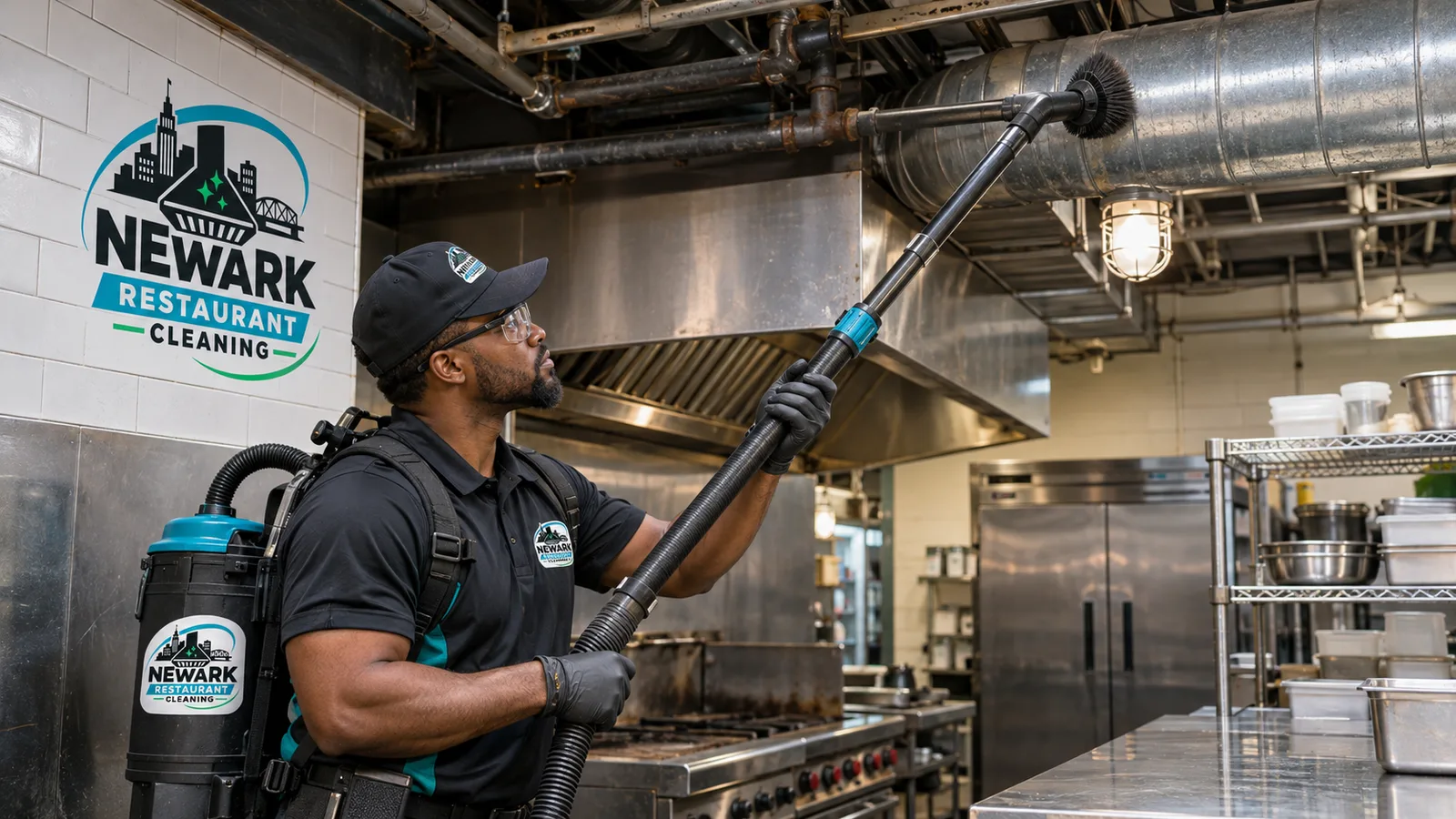
A trained cleaner using an extension vacuum system to remove dust from exposed ceiling pipes and duct exteriors in an Irvington restaurant kitchen

Irvington Overhead Cleaning

Overhead Cleaning for Working Restaurant Kitchens

Restaurant High Dusting Irvington addresses buildup on surfaces that routine wiping and floor care cannot reach. Common targets include ceiling corners, exposed pipes, conduit, beams, light housings, supply and return vent exteriors, wall tops, and the upper faces of equipment or cabinets. Dust in a commercial kitchen often binds with airborne grease and moisture, leaving a film that requires controlled agitation and suitable degreasing rather than dry sweeping alone.

Newark Restaurant Cleaning operates from Badger Avenue in Newark, close to the Irvington border. For overhead work, an experienced restaurant team in Newark, NJ plans around active food-service spaces, restricted access, and the need to protect surfaces beneath the cleaning area. The objective is a defined, repeatable scope that reaches neglected elevations without spreading loosened debris across the kitchen.

Irvington restaurants often work in compact storefronts and mixed-use commercial buildings where ceiling access can be tight. Along Springfield Avenue, busy service periods can leave a narrow maintenance window. Properties near the Newark boundary may also have older exposed utilities or layered overhead installations that require careful hand detailing. We assess those conditions before selecting ladders, extension tools, or compact access equipment.

High-Dusting Scope

What Restaurant High Dusting in Irvington Covers
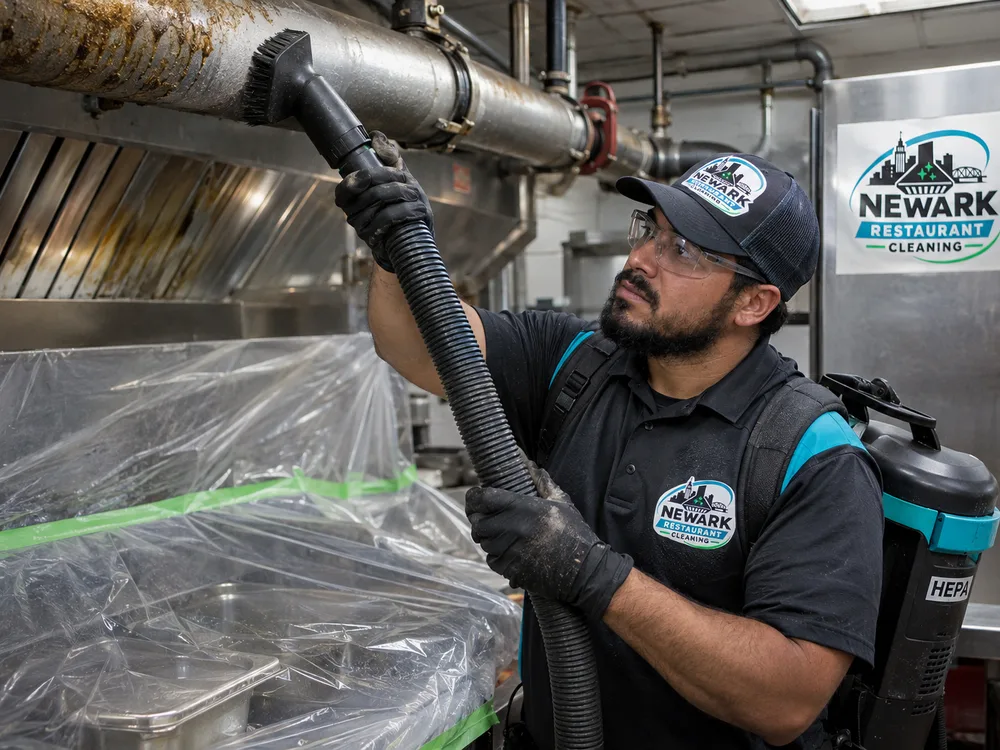
Close view of a HEPA vacuum attachment cleaning greasy dust from the exterior of an overhead pipe while food-contact surfaces are protected
Controlled capture helps keep loosened overhead debris out of the work area.

A high-dusting scope starts with the reachable overhead surfaces in food preparation, warewashing, storage, service, and back-of-house circulation areas. We may clean exposed structural members, sprinkler pipe exteriors, electrical conduit, non-porous ceiling surfaces, vent covers, fan guards, light exteriors, wall ledges, and the tops of refrigerators or shelving. Access and material compatibility determine the final list.

Dry, loose dust is commonly captured with HEPA-filtered vacuum equipment and soft-bristle attachments. Adhered residue may require hand wiping or low-moisture cleaning with a product appropriate for the surface. This controlled approach limits airborne dust and keeps moisture away from electrical components. We do not disturb insulation, open electrical equipment, alter fire-protection components, or clean inside active ductwork as part of routine high dusting.

Grease exhaust hoods, filters, fans, and duct interiors are specialized systems and should not be confused with general overhead cleaning. If an inspection finds residue inside an exhaust path or a condition requiring a licensed trade, we identify that boundary in the work scope rather than treating it as ordinary dust removal.
Overhead Detail Areas

Restaurant Kitchen Cleaning Irvington: Areas That Need Attention

Exposed ceilings and utilities

Open ceilings collect dust on joists, beams, pipe exteriors, conduit, and cable supports. Each surface needs a method that avoids snagging labels, wiring, and suspended components.

Vent and light exteriors

Supply diffusers, return grilles, fan guards, and light housings can develop visible rings or greasy film. Cleaning is limited to safe exterior surfaces unless a separate specialist scope is arranged.

Upper ledges and equipment tops

Refrigerator tops, cabinet crowns, wall caps, shelving, and door frames are easy to miss during daily closing work. These horizontal surfaces can hold substantial settled debris.

Dining and service areas

Decorative fixtures, exposed beams, menu displays, and high wall trim may need low-moisture detailing so dust is removed without damaging finished surfaces.

Storage and warewashing zones

Steam and humidity can make overhead residue cling near dish areas. Stored goods and clean wares are covered, moved, or isolated before work begins.

Localized greasy buildup

Where airborne cooking residue has bonded with dust, compatible degreasing and hand wiping may be required. Test cleaning helps establish the safest practical method.

Cleaning Process

How We Plan and Complete the Work

  1. 01

    Review the kitchen and overhead conditions

    We identify target surfaces, ceiling height, residue type, sensitive equipment, food-contact areas, and obstructions. The review also separates general high dusting from exhaust-system work, repairs, or regulated trade tasks.

  2. 02

    Set the scope and access plan

    The written scope lists included rooms and surfaces, exclusions, access equipment, and scheduling assumptions. Restaurants with limited space may need movable equipment repositioned before the crew arrives.

  3. 03

    Protect the work zone

    Food, utensils, packaging, preparation counters, and exposed equipment are removed or covered as appropriate. The area is isolated, and cleaning proceeds in controlled zones rather than opening the entire kitchen at once.

  4. 04

    Clean from high points downward

    Technicians use HEPA vacuuming, soft agitation, microfiber wiping, and suitable low-moisture methods. Working top to bottom lets the final detail address lower ledges and any settled material.

  5. 05

    Inspect and release the area

    We review the listed surfaces, remove protective coverings, collect debris, and note inaccessible or damaged areas. Kitchen staff should complete their normal food-contact sanitation procedure before production resumes.

Work-Zone Protection

A Safer Plan for Occupied Food-Service Spaces

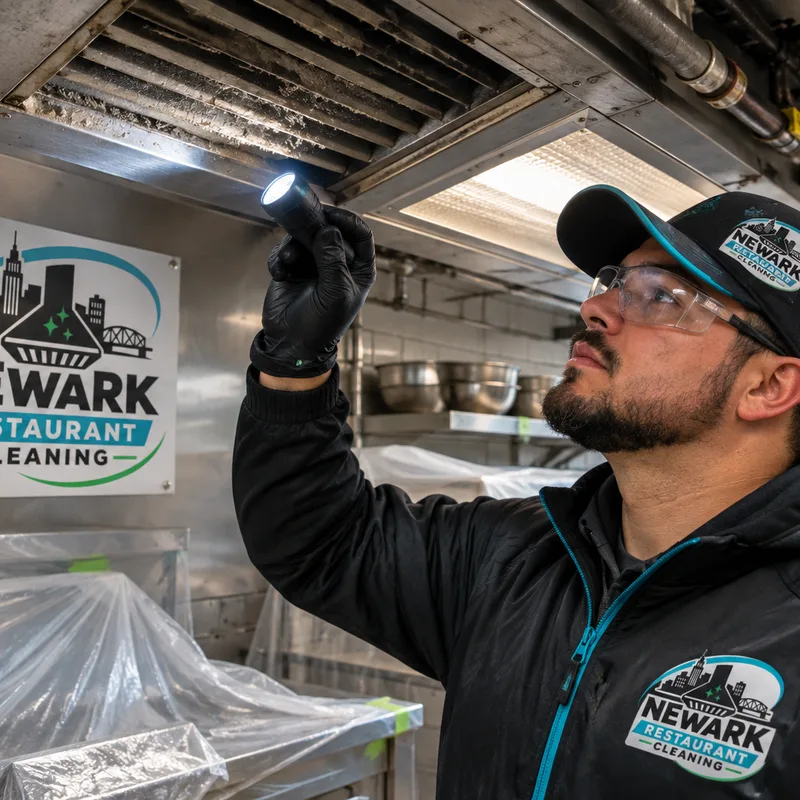
A protected restaurant prep area with counters covered and a cleaner inspecting ceiling vents, pipes, and light housings before high dusting

Overhead cleaning should be scheduled when food preparation is stopped and unprotected food is absent from the work zone. Even with vacuum capture, disturbing old buildup can release fine particles. A closed kitchen period gives the crew room to position ladders, protect equipment, and inspect the completed surfaces without employees moving through the area.

Access drives much of the plan. A standard extension pole may be enough for an open ceiling, while high or obstructed areas can require step ladders, platform ladders, or compact lifts where floor loading, doorway width, and clearance permit. We review sprinkler heads, emergency lighting, alarms, and exposed wiring without moving, painting, or applying cleaner to those components.

Seasonal heating and cooling changes in North Jersey can make residue around air outlets more visible, but dark staining can also indicate a maintenance issue rather than ordinary dust. We clean accessible grille exteriors. Suspected moisture, damaged ceiling material, pest evidence, or mechanical faults should be evaluated by the appropriate qualified provider.

Scheduling Guidance

When to Schedule High Dusting

Schedule the work when overhead buildup is visible, before repainting or equipment changes, after construction dust has entered the space, or as part of a planned deep-cleaning cycle. A fixed frequency cannot be assigned without seeing the kitchen. Cooking volume, fuel and cooking methods, ventilation performance, ceiling configuration, and nearby traffic all affect how quickly residue returns.

A newly opened or renovated restaurant may need post-construction dust removal before normal maintenance begins. An established kitchen may benefit from dividing the building into zones so the most exposed areas receive attention without closing every room. For Springfield Avenue operators, scheduling outside peak customer periods can reduce disruption. Smaller neighborhood restaurants near Irvington Center may prefer a single closure window if preparation, storage, and service spaces are closely connected.

High dusting supports a cleaner environment, but it does not replace routine food-contact sanitation, pest management, HVAC maintenance, or code-required exhaust cleaning. The Township of Irvington and the New Jersey Department of Health may be relevant to food-establishment oversight, while fire-code requirements govern commercial cooking exhaust systems. Operators remain responsible for the inspection, cleaning, and documentation obligations that apply to their equipment and premises.

Irvington Pricing Factors

How Much Does Restaurant High Dusting Cost in Irvington?

Restaurant high dusting in Irvington typically costs about $500 to $2,000 for a small or midsize restaurant, while large kitchens, high ceilings, heavy greasy residue, or lift access can cost more. These are general, nonbinding local estimates.

Final pricing depends on square footage, ceiling height, buildup, surface type, access restrictions, protection needs, and whether work must occur overnight or in phases. Exhaust-duct cleaning, repairs, and hazardous-material work are separate. The exact cost is confirmed after an on-site review and written scope.

Arrange an on-site review to identify the overhead surfaces, access needs, exclusions, and scheduling window before cleaning begins.

Practical Questions

Questions About Restaurant High Dusting Irvington

How long does restaurant high dusting take in Irvington?

A small, accessible restaurant may be completed in one work period, while larger or heavily coated kitchens can require multiple shifts. Ceiling height, protection setup, greasy residue, and tight access all affect duration. Irvington restaurants with compact back-of-house layouts may need phased work so equipment can be moved safely.

Can high dusting be done while the restaurant is open?

High dusting should generally occur when food preparation has stopped and the work zone is closed to staff and customers. Overhead debris must be controlled, food and utensils must be protected or removed, and ladders need clear floor space. Scheduling after service or during a planned closure is usually the practical choice.

Does restaurant kitchen cleaning include the exhaust hood and ductwork?

Routine high dusting covers approved exterior surfaces, not grease-exhaust duct interiors, rooftop fans, or inaccessible hood plenums. Commercial cooking exhaust systems have separate inspection and cleaning requirements. Any exhaust-related work should be clearly identified, performed by a qualified provider, and documented for the restaurant's records.

Will you clean around sprinkler pipes, alarms, and electrical conduit?

Accessible exteriors may be dusted carefully, but technicians do not move, disable, coat, or open fire-protection and electrical components. Sprinkler heads, detectors, damaged wiring, and energized equipment require strict clearance. Conditions needing repair are excluded and referred to the appropriate licensed trade.

What must the restaurant do before the crew arrives?

The kitchen should stop food preparation, remove exposed food and clean wares, secure sensitive items, and provide access to the listed areas. Equipment should be moved only when the written plan assigns that task. The restaurant should also identify alarms, shutoff restrictions, fragile fixtures, and any surfaces with known damage.

How often should an Irvington restaurant schedule high dusting?

The right interval is based on inspection rather than a universal calendar. Open ceilings, cooking aerosols, ventilation patterns, and operating volume change the rate of buildup. Documented visual checks can help an Irvington operator schedule cleaning before residue becomes heavy or begins dropping onto lower surfaces.

Is high dusting suitable after restaurant renovation work?

Yes, provided construction is complete, airborne work has stopped, and the area is safe for cleaning. Fine drywall and cutting dust often settles on pipes, beams, lights, and equipment tops. Hazardous or suspect materials, active construction, and damaged utilities require assessment and correction before ordinary post-construction high dusting.

Plan a Cleaner Overhead Kitchen Area

Tell Newark Restaurant Cleaning about the ceiling height, affected rooms, visible residue, and preferred closure window. We will review access and provide a written scope for your Irvington restaurant.

Talk With Our Team

Plan a Cleaner Restaurant

Tell us about your space, schedule, and cleaning priorities. We will help define a practical scope for your restaurant.

Request a Quote

Request Restaurant Cleaning Service

After you submit the form, our team will review your details and contact you to discuss the property and next steps.