Newark Restaurant Floor Service

Commercial Kitchen Floor Cleaning

Professional degreasing for tile, grout, edges, and high-traffic work zones, scheduled around your Newark restaurant's operating hours.

✓ Tile and grout degreasing
✓ Detailed edges and drain surrounds
✓ Scheduled around operating hours
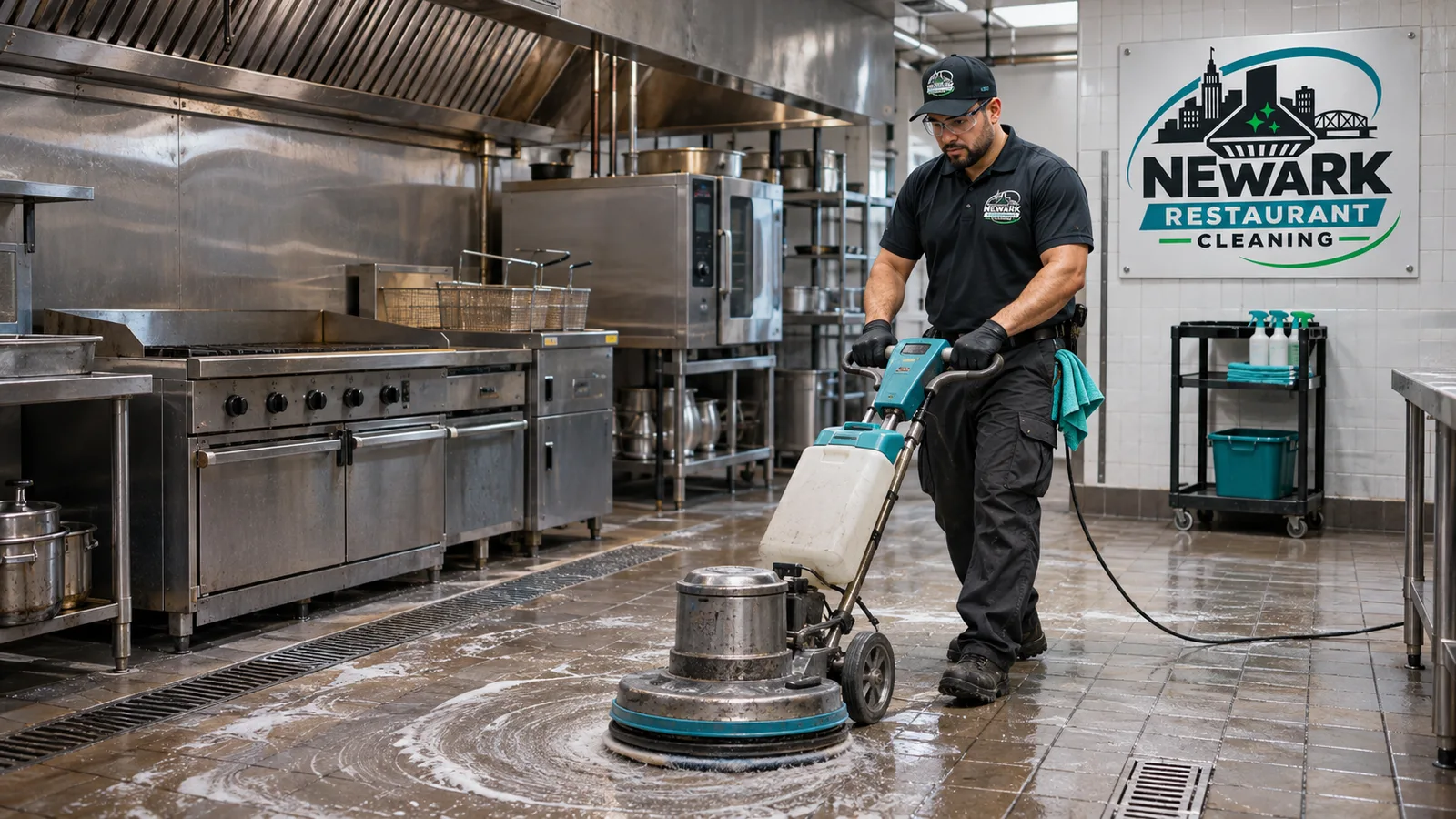
A commercial cleaning technician using a rotary floor machine on the tiled floor of an empty Newark restaurant kitchen, with cooking equipment and floor drains visible

Floor-Specific Scope

A Cleaner Floor Starts With the Right Degreasing Process

Commercial Kitchen Floor Cleaning addresses the grease film, tracked-in soil, food residue, and darkened grout that routine mopping can leave behind. Newark Restaurant Cleaning uses commercial degreasers, mechanical agitation, detailed edge work, and controlled soil removal to clean the floor without spreading greasy water across the kitchen.

Our process is built around the demands of active food-service operations. We account for cooking lines, prep areas, warewashing zones, walk-ins, floor drains, and the paths employees use throughout a shift. To minimize disruption, Newark's restaurant specialists coordinate access and drying time so the work can fit before opening, after closing, or during another approved service window.

The goal is a consistently clean surface with less greasy residue underfoot. Final results depend on the flooring material, grout condition, buildup level, and any permanent staining or physical damage. Before cleaning begins, we identify those conditions and agree on the areas included.

Newark Work Zones

Restaurant Floor Degreasing for Newark Work Zones
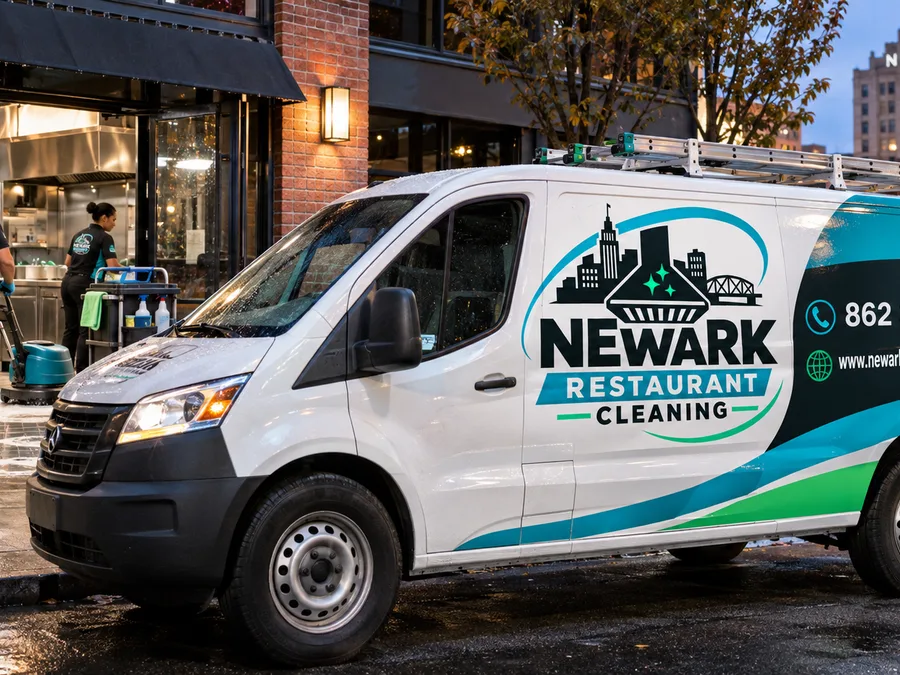
A technician performing restaurant floor degreasing in a compact commercial kitchen, concentrating on the greasy traffic path between a fryer line and a preparation area
Targeted cleaning follows grease beyond the cook line.

Grease rarely stays beside the fryer. Shoes, carts, and mop water carry it into prep aisles, dish areas, storage paths, and service corridors. Effective restaurant floor degreasing follows those traffic patterns instead of treating every square foot the same way.

Restaurants near the Prudential Center may need service windows planned around event-driven operating hours and heavier foot traffic. In the Ironbound, dense restaurant activity can make delivery access and after-hours scheduling part of the cleaning plan. Downtown kitchens often have compact work areas where equipment legs, tight corners, and narrow aisles require detailed hand agitation. Along Ferry Street, busy dining periods may call for cleaning after the final close rather than during daytime preparation.

Newark winters also bring road salt, grit, and wet soil through entrances and receiving areas. Once mixed with cooking residue, that soil can form a stubborn film that ordinary mop solution redistributes. We adjust chemical dwell time and agitation to the actual buildup while protecting adjacent equipment and keeping wastewater controlled.
Floor Cleaning Coverage

What Restaurant Floor Cleaning Services Cover

Cook-Line Degreasing

Heavy residue near fryers, ranges, grills, and equipment legs receives focused pretreatment, dwell time, and agitation. Splash zones and traffic paths are cleaned as part of the same planned area.

Restaurant Tile Cleaning

Quarry tile, ceramic tile, and other compatible commercial floor surfaces are cleaned with methods selected for the material and soil load. A test area can confirm chemical compatibility when the finish or prior treatment is uncertain.

Restaurant Grout Cleaning

Recessed grout lines trap oily soil that a flat mop cannot reach well. Mechanical brushing and detail work lift residue from sound grout, although permanently discolored or damaged joints may require repair rather than further cleaning.

Edges and Equipment Perimeters

Wall lines, corners, thresholds, floor-drain surrounds, and accessible equipment edges receive separate attention. Immovable equipment is cleaned around unless safe access has been arranged in advance.

Prep and Warewashing Areas

These zones commonly collect food residue, detergent film, and moisture. The cleaning method accounts for nearby racks, sinks, drains, and surfaces that must remain protected.

Entrances and Service Paths

Kitchen entrances, receiving paths, and other high-traffic areas can be included when they carry grease or outdoor soil into food-preparation spaces.

Tile and Grout Detail

Restaurant Tile and Grout Need Different Treatment

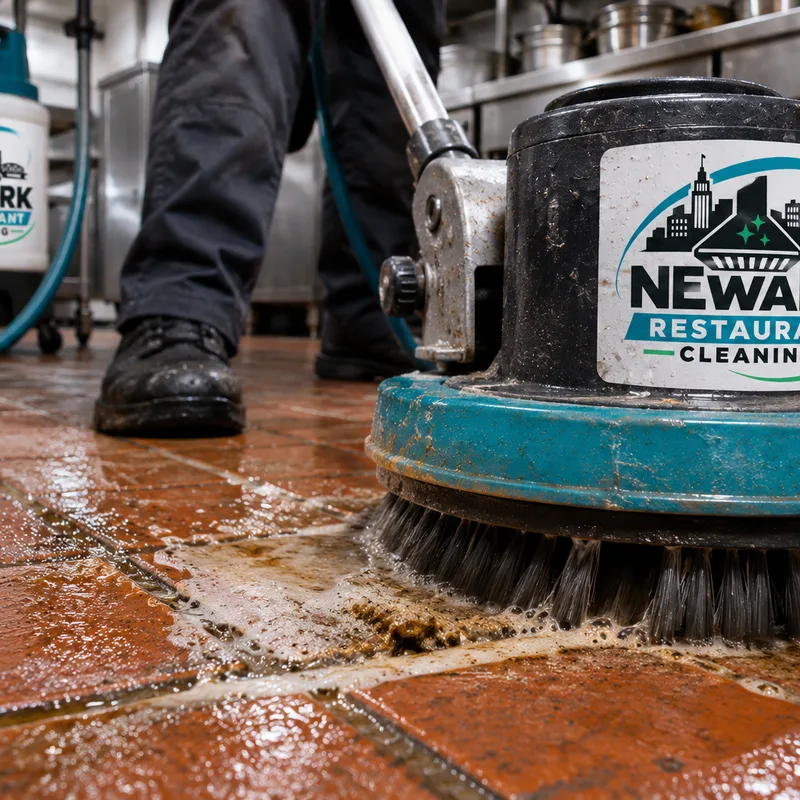
A close view of a commercial kitchen's quarry tile and grout during mechanical brushing, showing loosened greasy soil being extracted from the grout joints
Grout lines require direct agitation and complete soil removal.

Tile faces and grout joints do not release soil in the same way. Tile is comparatively smooth, while cementitious grout is porous and slightly recessed. Grease, carbonized residue, and dirty cleaning solution can settle into those joints, leaving the floor looking dull even after the tile face has been mopped.

Kitchen floor degreasing typically starts with dry debris removal, followed by a properly diluted cleaner applied for a controlled dwell period. Agitation with a floor machine, deck brush, or grout brush breaks the bond between the soil and surface. The released solution then has to be removed rather than allowed to dry back onto the floor. Edges and corners are handled separately because large equipment cannot reach them.

We do not assume every dark grout line is dirty. Staining, eroded joints, cracked tile, loose tile, and failed repairs may remain visible after cleaning. Likewise, damaged grout around a floor drain is a maintenance issue, not a condition that stronger chemicals should conceal. A pre-service review distinguishes removable buildup from wear so expectations are clear.

Cleaning Process

Our Commercial Kitchen Floor Cleaning Process

  1. 01

    Inspect the Floor and Plan Access

    We review the flooring type, grease concentration, grout condition, drainage, equipment layout, and accessible work zones. The agreed scope identifies any exclusions, damaged areas, and items that restaurant staff need to move.

  2. 02

    Remove Loose Debris and Protect the Work Area

    Dry debris is collected before liquids are applied. Nearby low surfaces, doorways, and sensitive equipment are protected as needed, and the kitchen is kept clear of active food preparation during service.

  3. 03

    Pretreat Greasy Areas

    A commercial cleaning agent appropriate for the floor is applied at the correct dilution. Heavier buildup near the cook line may receive separate pretreatment and additional dwell time.

  4. 04

    Agitate Tile, Grout, and Edges

    Mechanical scrubbing loosens bonded soil across open floor areas. Hand tools address grout lines, corners, thresholds, drain surrounds, and accessible equipment perimeters.

  5. 05

    Recover Soil and Rinse as Needed

    The suspended soil and cleaning solution are removed with suitable recovery equipment. Rinsing is based on the product and surface so cleaner residue is not left to attract new dirt.

  6. 06

    Review the Completed Areas

    We inspect the cleaned floor, address remaining removable spots, and identify staining or damage that cleaning cannot correct. The floor is left to dry before normal kitchen traffic resumes.

Newark Pricing Factors

How Much Does Commercial Kitchen Floor Cleaning Cost in Newark?

Commercial kitchen floor cleaning in Newark typically costs about $300 to $900 per visit, while large kitchens or floors with heavy grease buildup may cost $1,000 or more. Smaller scheduled cleanings generally fall toward the lower end; first-time restoration work usually costs more.

Final pricing depends on square footage, floor material, grease level, grout condition, equipment access, service timing, and whether entrances or storage paths are included. Recurring service may require less intensive work than an overdue floor. The exact cost is confirmed after an inspection and written scope.

Recurring Floor Care

Recurring Restaurant Floor Cleaning in Newark

A recurring schedule helps prevent grease from becoming a thick, difficult layer in grout lines and along equipment perimeters. The right frequency depends on cooking volume, menu, hours, staffing, floor texture, and the effectiveness of daily mopping. A high-output fryer kitchen may need professional degreasing more often than a café with limited hot-food preparation.

Professional service supports daily cleaning rather than replacing it. Staff should still remove spills promptly, use clean mop solution, follow chemical labels, and keep tools for kitchen floors separate from restroom equipment. Greasy mop water should be changed before it becomes another source of residue. Wet floors also need to be controlled until dry, since cleaning cannot make a contaminated or wet surface slip-proof.

Newark Restaurant Cleaning can set a one-time deep cleaning or a recurring plan based on actual floor conditions. Each proposal should state the included zones, service frequency, access requirements, and any conditions outside the cleaning scope. That gives managers a practical basis for comparing restaurant floor cleaning services.

Describe your kitchen layout, flooring, problem areas, and preferred service window to receive a clear cleaning scope built around your operation.

Practical Questions

Commercial Kitchen Floor Cleaning Questions

How long does restaurant floor cleaning take?

A typical commercial kitchen floor may require several hours to clean, plus drying time. Square footage, grease accumulation, equipment spacing, grout detail, and the number of included zones all affect the schedule. Compact Downtown Newark kitchens can take longer per square foot when narrow aisles and fixed equipment limit machine access.

Can you clean around fryers, ranges, and other fixed equipment?

Yes, accessible floor around fixed equipment can be degreased and detailed without moving appliances. Cleaning beneath equipment requires safe access, adequate clearance, and prior agreement about who will disconnect or reposition it. Restaurant staff or a qualified equipment professional should handle units that involve gas, electrical, water, or ventilation connections.

Will restaurant grout cleaning restore the original grout color?

Cleaning can remove embedded grease and soil, but it cannot guarantee the grout's original color. Cementitious grout may retain discoloration from age, pigments, chemicals, or absorbed oils. Cracked, missing, or eroded joints need repair, particularly around floor drains and other persistently wet areas.

Can cleaning remove years of kitchen grease in one visit?

A deep cleaning can remove substantial grease buildup, but severe deposits may require more than one treatment. Results depend on the floor material, grout porosity, old coatings, access, and whether residue has hardened around equipment. We identify permanent staining and damaged surfaces during the pre-service review.

Can service be scheduled after the restaurant closes?

After-hours scheduling can be arranged based on availability and the time needed for cleaning and drying. This is often practical for Newark restaurants with long service periods or event-driven traffic near the Prudential Center. The kitchen must be free of active food preparation, unnecessary foot traffic, and movable items identified in the scope.

How often should a restaurant schedule kitchen floor degreasing?

Frequency should be based on grease production and floor condition rather than a fixed rule. Frying volume, operating hours, tile texture, grout depth, and daily mop practices all matter. An initial cleaning shows how quickly residue returns and provides a sound basis for setting a weekly, monthly, or other recurring interval.

Do you clean dining-room floors during the same visit?

Dining areas can be considered when they are included in the agreed commercial floor cleaning scope. The method may differ because front-of-house flooring can include tile or another finish with separate care requirements. Kitchen degreasing remains distinct because food-service soil and equipment access call for a more intensive process.

Plan a Cleaner Kitchen Floor

Tell Newark Restaurant Cleaning about the tile, grout, grease buildup, operating schedule, and areas that need attention. We will outline the work and confirm what to expect before service begins.

Talk With Our Team

Plan a Cleaner Restaurant

Tell us about your space, schedule, and cleaning priorities. We will help define a practical scope for your restaurant.

Request a Quote

Request Restaurant Cleaning Service

After you submit the form, our team will review your details and contact you to discuss the property and next steps.