Cooking-Line Surfaces
Degreasing for accessible exteriors, sides, backs, control areas, splash zones, and the floor beneath movable cooking equipment. Products and dwell times are selected for the surface and soil.
Serving Newark, New Jersey & surrounding areas
Newark Commercial Kitchen Service
Detailed commercial cleaning for cooking equipment, prep areas, floors, and hard-to-reach surfaces, scheduled around your restaurant's operating hours.
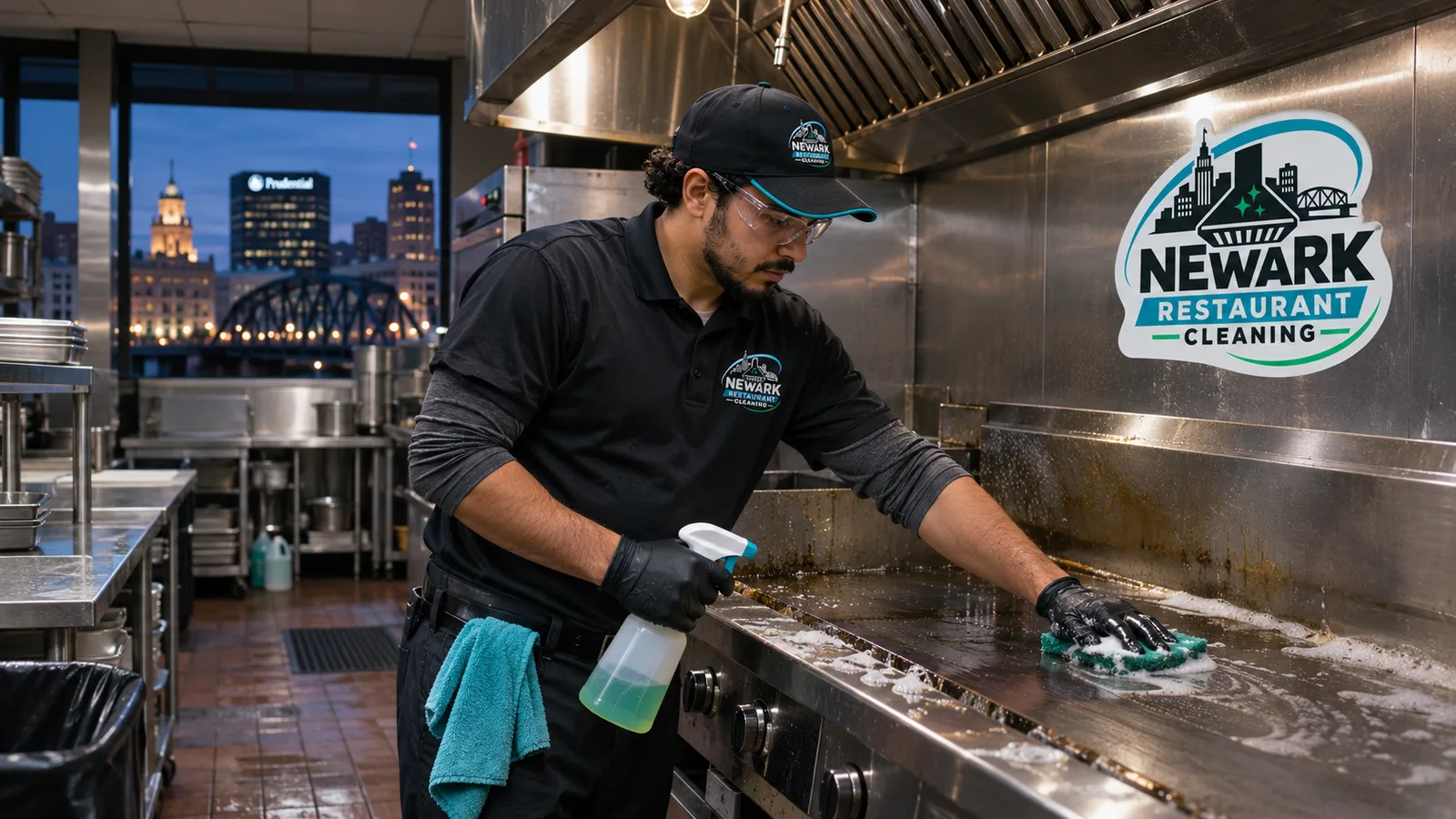
Kitchen Cleaning Services should address the grease, carbon deposits, food residue, and soil that routine shift cleaning can leave behind. Newark Restaurant Cleaning develops a written scope around the equipment, surfaces, access conditions, and operating schedule at each property. The goal is a thorough clean that supports an orderly workspace without disrupting prep or meal service.
As Newark's trusted restaurant team, we coordinate the work with managers before cleaning begins, identify areas that need special handling, and confirm which equipment can be moved or opened safely. Restaurants near Newark Penn Station may need work timed around long service days and heavy customer traffic. Ironbound dining rooms often operate in tightly arranged commercial spaces, while larger kitchens near Newark Liberty International Airport may have narrow windows between service periods. Scheduling and crew planning account for those real operating constraints.
Our work stays focused on accessible kitchen equipment and surfaces. Fire-suppression systems, internal electrical components, gas repairs, pest treatment, and regulated exhaust-system work require the appropriate specialist. Those boundaries are documented before the job starts.
Cleaning Coverage
Degreasing for accessible exteriors, sides, backs, control areas, splash zones, and the floor beneath movable cooking equipment. Products and dwell times are selected for the surface and soil.
Detailed cleaning may include ovens, ranges, fryers, grills, griddles, steam tables, mixers, shelving, and refrigeration exteriors. Equipment is handled according to the agreed scope and manufacturer limitations.
Worktables, sinks, backsplashes, racks, shelving, and other washable surfaces receive focused soil removal. Food-contact surfaces are treated with suitable products and rinsed or finished as the label requires.
Scrubbing targets grease film, soil at wall edges, areas beneath movable equipment, and accessible drain surroundings. Standing water is controlled so the work does not spread residue through the kitchen.
Washable walls, doors, tiles, and splash-prone areas can be included where heat, steam, and airborne grease have created buildup.
A commercial kitchen deep cleaning plan can focus on a neglected line, prepare for reopening, support a management change, or establish a cleaner baseline for recurring maintenance.
Detailed Soil Removal
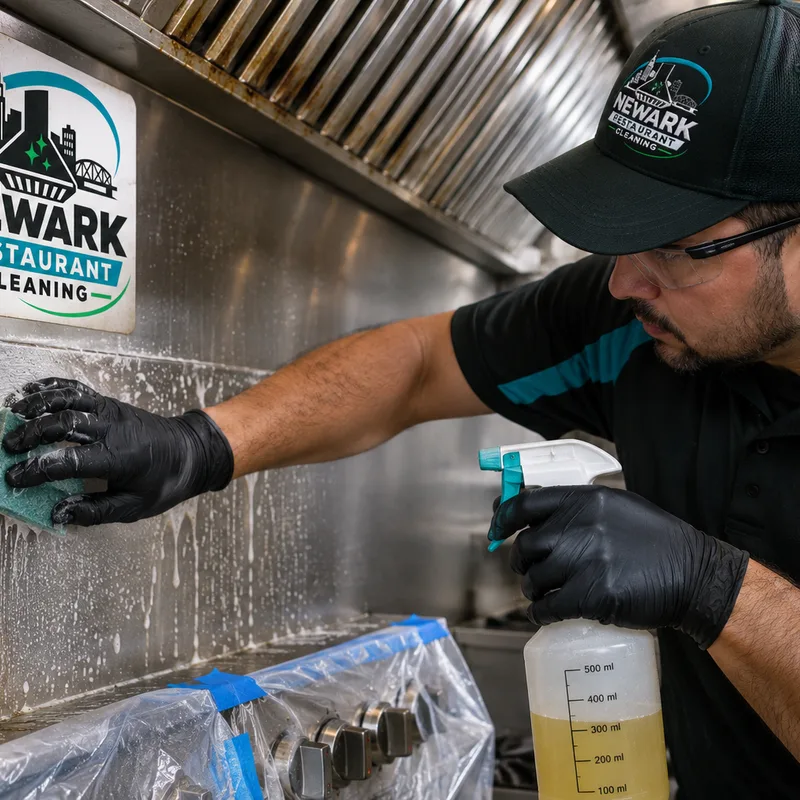
A credible deep clean starts with inspection, not a generic checklist. The crew looks at soil type, surface material, equipment clearances, grease concentration, and safe access. Stainless steel, quarry tile, sealed flooring, painted walls, aluminum components, and rubber seals do not all tolerate the same chemistry or agitation.
Heavy grease may require an alkaline degreaser and adequate dwell time before controlled agitation. Carbonized residue may need repeated treatment rather than forceful scraping that could damage a finish. Cleaners also account for chemical compatibility, product label directions, ventilation, electrical connections, pilot lights, and sensitive controls. Safety Data Sheets should be available for the products used.
Restaurant kitchen cleaning is separate from hood and duct cleaning. Accessible hood-canopy exteriors may fit a general cleaning scope, but grease-removal work inside exhaust ducts and fans is specialized work associated with NFPA 96 requirements. A responsible kitchen cleaning company states that distinction clearly.
Cleaning Process
We review the cooking line, prep and wash areas, equipment access, floor conditions, water availability, shutdown requirements, and the hours when work can take place.
The written plan identifies included equipment and surfaces, exclusions, access responsibilities, and any preparation required from restaurant staff. This keeps expectations clear before the scheduled visit.
Food, utensils, disposables, and exposed ingredients must be removed or securely protected. Equipment is shut down and cooled when required, and sensitive areas are isolated before cleaning products are applied.
The crew works through the agreed areas using suitable chemistry, dwell time, agitation, rinsing, extraction, and wiping methods. Soil is removed in a controlled order to limit cross-contamination.
A final walkthrough checks the contracted areas and identifies any condition that could not be corrected through cleaning, such as damaged grout, failed seals, corrosion, or inaccessible internal components.
Newark Pricing Factors
Professional kitchen cleaning in Newark typically ranges from about $500 to $2,500, while large kitchens, severe grease buildup, or extensive equipment detailing can cost more. A focused cooking-line clean generally costs less than a full kitchen deep clean.
Final pricing depends on kitchen size, equipment count, soil level, access, shutdown time, crew requirements, and whether equipment must be moved. Exhaust-duct work and repairs are separate specialties. Newark Restaurant Cleaning confirms the exact cost after reviewing the kitchen, requested scope, and scheduling conditions.
Newark Scheduling
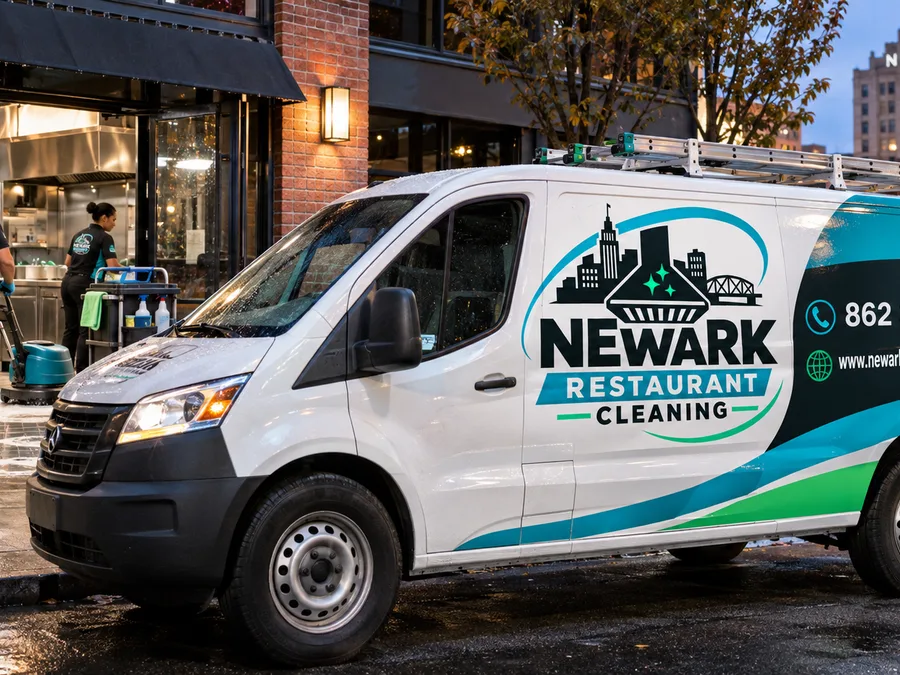
Commercial kitchens rarely need every area cleaned at the same interval. Fryer surrounds and the cooking line may accumulate grease quickly, while shelving, wall surfaces, and low-touch equipment exteriors can follow a different rotation. A practical plan separates daily staff duties from periodic professional kitchen cleaning.
Recurring service can be arranged around production and access. For restaurants in Downtown Newark, loading and parking restrictions may affect when equipment and crews can arrive. Ferry Street operations in the Ironbound often need cleaning after late dinner service, while kitchens serving offices around University Heights may prefer work outside weekday meal periods. South Ward locations, including properties near the business address on Badger Avenue, can also schedule around their own closing and preparation windows.
Managers should keep daily cleaning logs, address spills promptly, and follow product labels for food-contact surfaces. Professional service then targets heavier buildup and spaces that are difficult to reach during a normal closing routine.
Practical Questions
A focused equipment or cooking-line clean may take several hours, while a full commercial kitchen deep cleaning can require a full shift or more. Kitchen size, grease buildup, equipment access, cooling time, and the number of cleaners determine the schedule. Newark restaurants with short overnight windows may divide the work into planned zones.
Yes, after-hours scheduling is often available when access, shutdown, cooling, and reopening times are confirmed in advance. Restaurants near Newark Penn Station, Ferry Street, and entertainment venues may have late service periods, so the work window must allow enough time for safe cleaning and drying before staff return.
General kitchen cleaning does not automatically include internal hood, duct, or exhaust-fan cleaning. Accessible canopy exteriors may be included in a written scope, but internal grease-exhaust work requires specialized methods and documentation tied to NFPA 96. Confirm whether you need surface cleaning, exhaust-system service, or both.
Yes, staff generally need to remove or protect food, utensils, small appliances, paper goods, and other exposed items before cleaning begins. Cooking equipment may also need to be shut down and fully cooled. The preparation list is confirmed during the walkthrough so the Newark cleaning appointment can start on time.
The right frequency depends on cooking volume, menu, equipment, operating hours, and how quickly grease and carbon accumulate. A high-use fryer line may need attention more often than storage shelving or low-touch walls. An initial inspection can divide the kitchen into sensible cleaning intervals rather than applying one schedule to every area.
Limited work may be possible in an isolated area, but deep cleaning is usually safer and more effective when the affected equipment is off, cool, and clear of active food preparation. Tight Newark kitchens often lack enough separation for simultaneous production and degreasing, so phased after-hours cleaning is usually the better plan.
Kitchen size, equipment count, grease severity, accessibility, required crew size, and the available service window have the greatest effect on the quote. Moving approved equipment, detailing hard-to-reach surfaces, or splitting work across multiple visits can also change labor time. A walkthrough at the property produces the most reliable scope.
Tell Newark Restaurant Cleaning what needs attention and when the kitchen is available. We will review the conditions, define the work, and provide a clear plan before cleaning begins.
Talk With Our Team
Tell us about your space, schedule, and cleaning priorities. We will help define a practical scope for your restaurant.
Request a Quote
After you submit the form, our team will review your details and contact you to discuss the property and next steps.