Elizabeth Restaurant Cleaning

Restaurant Cleaning Elizabeth

Detailed cleaning for commercial kitchens, dining rooms, floors, restrooms, and food-service equipment, scheduled around your operating hours.

✓ Kitchen and equipment detail
✓ Dining rooms and restrooms
✓ Scheduled around operating hours
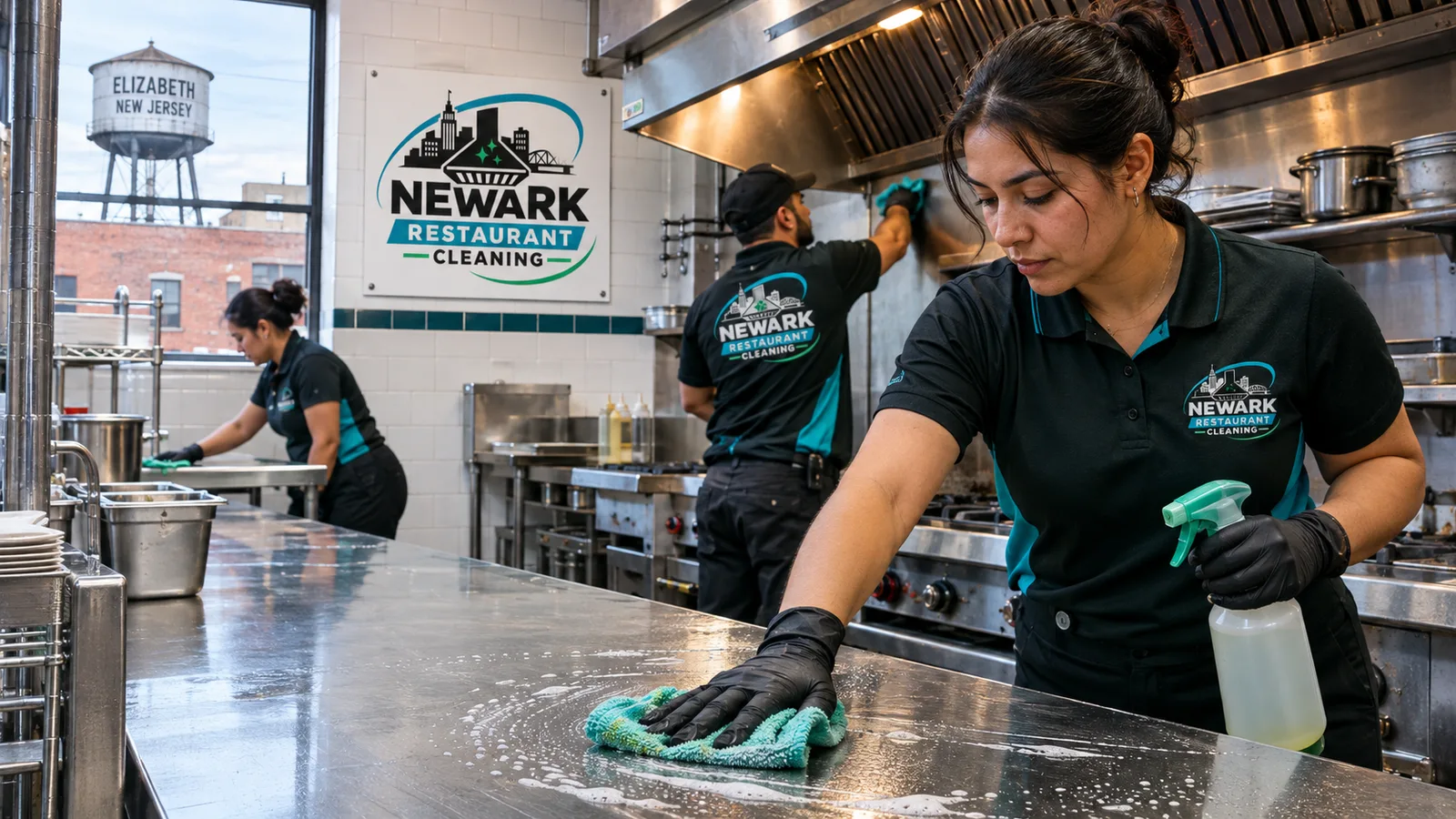
A restaurant cleaning crew sanitizing stainless-steel preparation surfaces in a commercial kitchen in Elizabeth, New Jersey

Elizabeth Service Scope

Restaurant Cleaning Elizabeth Businesses Can Schedule Around Service

Restaurant Cleaning Elizabeth should address the areas guests notice and the grease, residue, and food debris that collect behind the scenes. Newark Restaurant Cleaning provides recurring and one-time cleaning for restaurants, cafés, bakeries, takeout counters, bars, and other food-service operations in Elizabeth.

A useful cleaning plan begins with the way the restaurant operates. We consider opening and closing times, customer traffic, cooking volume, floor materials, equipment layout, and any areas handled by an in-house closing crew. Working from our Badger Avenue base, a professional restaurant company in Newark, NJ coordinates the work and builds a written scope for the Elizabeth property rather than relying on a generic checklist.

Elizabeth has several distinct restaurant settings. Downtown locations near Broad Street may need cleaning timed around pedestrian activity and compact back-of-house layouts. Establishments near Elizabeth Avenue often contend with steady customer turnover and frequent entrance-floor care. Restaurants serving travelers near Newark Liberty International Airport may operate extended hours, so access windows and handoff procedures must be settled before service begins. The Jersey Gardens area also brings high-volume dining periods that can increase soil at entrances, restrooms, and customer-facing floors.

Cleaning Coverage

What a Restaurant Cleaning Plan Can Cover

Commercial Kitchen Areas

Cleaning can include floors, walls, washable surfaces, prep tables, sinks, shelving exteriors, splash zones, and accessible areas around the cook line. Food-contact surfaces are handled according to the agreed scope and product directions.

Dining Rooms and Service Counters

Tables, chairs, booths, counters, partitions, ledges, doors, and touchpoints receive attention based on use. Soil around table bases and beneath movable furniture can be included in periodic detail work.

Floor Care

Sweeping, vacuuming, mopping, degreasing, and machine scrubbing are matched to the floor material. Kitchen tile and grout often require a different process than dining-room resilient flooring or carpet.

Restrooms

Fixtures, partitions, mirrors, dispensers, floors, and common touchpoints are cleaned and disinfected with attention to dwell time, which is the period a disinfectant must remain wet to work as directed.

Entrances and High-Touch Areas

Door glass, handles, push plates, host stations, railings, and entrance floors can be built into routine visits. Winter moisture and deicing residue may require added floor attention during colder weather.

Periodic Deep Cleaning

Detail visits can target baseboards, corners, wall-floor edges, movable equipment zones, shelving, vents, and accumulated soil that routine nightly cleaning does not fully address.

Equipment Detail

Restaurant Equipment Cleaning in Elizabeth

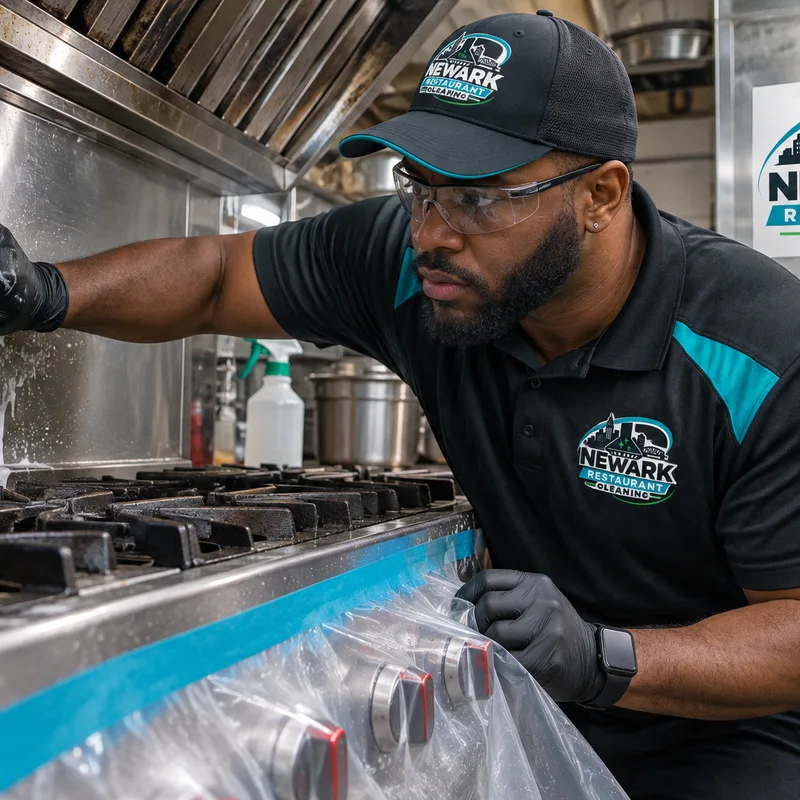
Close view of a trained cleaner removing grease from accessible commercial range and stainless-steel backsplash surfaces while protecting controls

Restaurant Equipment Cleaning Elizabeth businesses request often involves accessible interior and exterior surfaces on ovens, ranges, fryers, grills, griddles, refrigerators, freezers, prep units, racks, and stainless-steel worktables. The exact scope should identify which equipment will be cool, emptied, disconnected, or moved before the crew arrives.

Grease removal is not a single-step wipe-down. Heavy deposits may require scraping with surface-safe tools, application of a compatible degreaser, suitable dwell time, agitation, rinsing where appropriate, and drying. Stainless steel should be cleaned with the grain to reduce visible scratching. Labels, controls, electrical components, pilot assemblies, and sensitive seals need protection from excess liquid.

Cleaning accessible hood exteriors, backsplash areas, and nearby surfaces is different from code-regulated exhaust-system cleaning. Likewise, cleaning a refrigerator's accessible surfaces does not replace mechanical coil, electrical, refrigerant, or appliance repair work. Those boundaries are documented before service so the restaurant knows what is included and whether a specialized contractor is needed.
Cleaning Process

How We Build and Deliver the Cleaning Scope

  1. 01

    Walk Through the Restaurant

    We review the kitchen, dining room, restrooms, storage access, waste-transfer areas, floor types, and equipment included in the request. The walkthrough also identifies restricted surfaces and shutdown requirements.

  2. 02

    Set Priorities and Frequency

    The scope separates routine work from periodic detail cleaning. High-use restrooms or dining floors may need frequent service, while grout restoration, equipment pullouts, and wall washing can follow a separate rotation.

  3. 03

    Confirm Access and Safety

    The restaurant confirms who provides access, which appliances will be cool, and whether equipment can be moved. Safety data sheets, chemical compatibility, wet-floor controls, and ventilation needs are addressed before work starts.

  4. 04

    Clean in a Controlled Sequence

    Crews generally work from higher surfaces toward lower ones and from cleaner zones toward heavier soil. Separate tools or color-coded supplies can help reduce cross-contamination between kitchens, dining spaces, and restrooms.

  5. 05

    Review the Completed Work

    The agreed areas are checked after cleaning. Any access limitation, maintenance issue, damaged surface, or task that could not be completed safely is documented for the restaurant contact.

After-Hours Coordination

Cleaning That Fits the Restaurant's Operating Pattern

A restaurant cleaner using a commercial floor machine in an empty Elizabeth dining room after operating hours with wet-floor controls placed nearby

A dependable schedule must fit food preparation, deliveries, closing duties, and reopening. Overnight cleaning may suit a dinner-focused dining room, while an early-morning bakery may need service after its production cycle instead. Restaurants with late hours may require phased work so cleaners do not interfere with employees completing cash, food-storage, or shutdown procedures.

Elizabeth's dense commercial corridors can also make loading access and waste pickup timing relevant. A walkthrough should establish where supplies enter, where cleaning equipment can be staged, and which doors must remain secured. During wet or snowy weather, entrance mats and hard floors can collect moisture, grit, and deicing residue. More frequent spot cleaning helps control tracked-in soil, but warning signs and restricted access remain necessary until floors are dry.

We can work alongside an existing staff routine rather than duplicate it. If employees already clean food-contact surfaces and handle daily sweeping, the professional scope can concentrate on floors, restrooms, dining-room details, equipment exteriors, and scheduled deep cleaning.

Sanitation Standards

Sanitation, Products, and Cross-Contamination Control

Cleaning and sanitizing are related but separate steps. Cleaning removes food residue, grease, and soil. Sanitizing then reduces microorganisms on an already cleaned surface when the product is mixed, applied, and left for the label's required contact time. Disinfectants used in restrooms and on suitable touchpoints also have label-specific dwell times and surface limitations.

A restaurant should know which party handles food-contact sanitation and how chemicals are stored during service. Products must be compatible with stainless steel, coated surfaces, stone, tile, grout, resilient flooring, and other materials present in the property. More chemical is not automatically more effective; incorrect dilution can leave residue, damage finishes, or prevent the product from performing as intended.

Tool separation matters as well. Restroom cloths and mop supplies should not move into food-preparation areas. Fresh solutions, clean microfiber, labeled bottles, and a defined work sequence support consistent results. The restaurant remains responsible for its food-safety plan and regulatory duties, while the cleaning scope should clearly document the tasks entrusted to the crew.

Elizabeth Pricing Factors

What Determines the Price of Restaurant Cleaning?

Restaurant cleaning is usually priced after a walkthrough because square footage alone does not show the labor involved. The estimate changes with cleaning frequency, kitchen grease levels, dining capacity, number of restrooms, floor materials, equipment quantity, access conditions, and the amount of furniture or equipment that must be moved.

A recurring maintenance visit generally costs less per visit than a neglected kitchen restoration because established soil takes longer to loosen and remove. Equipment interiors, heavy grout work, high areas, after-construction dust, and specialty floor treatment may be quoted separately. Service outside standard access windows can also affect staffing.

A useful proposal lists the rooms, surfaces, equipment, frequency, exclusions, and restaurant responsibilities. Newark Restaurant Cleaning confirms the exact price after reviewing the Elizabeth facility and the requested schedule.

Get a written cleaning scope based on your kitchen layout, equipment, floor materials, operating hours, and current level of buildup.

Practical Questions

Questions About Restaurant Cleaning in Elizabeth

How often should an Elizabeth restaurant schedule professional cleaning?

The right frequency depends on cooking volume, customer traffic, floor use, and what employees clean each day. Busy kitchens may need frequent floor and grease-control service, while wall washing, grout detailing, equipment pullouts, and other deep-cleaning tasks can follow a weekly, monthly, or custom rotation. A walkthrough is the best way to divide routine and periodic work.

Can cleaning take place after the restaurant closes?

Yes, service can be planned for an approved after-hours access window when staffing and building access allow it. Restaurants near Elizabeth's airport and major commercial areas may keep extended schedules, so the plan should identify a firm start time, alarm procedure, authorized entrance, equipment shutdown status, and responsible closing contact.

Do you clean commercial fryers, ovens, grills, and refrigerators?

Accessible surfaces on fryers, ovens, grills, griddles, refrigerators, and similar equipment can be included in the written scope. Equipment may need to be cool, emptied, shut down, or disconnected by restaurant personnel. Internal mechanical parts, gas work, electrical repairs, refrigerant systems, and code-regulated exhaust cleaning require properly qualified specialists.

What should we do before a restaurant deep cleaning?

Remove or secure food, personal items, cash, and fragile objects, then confirm which equipment can be moved or opened. The restaurant should also identify sensitive finishes, arrange access, cool cooking equipment, and explain any shutdown restrictions. These preparations give the crew safe access and reduce delays.

Can you clean without interrupting food preparation?

The safest approach is to clean each work zone when food preparation has stopped and exposed food has been removed or protected according to the restaurant's procedures. Tasks may be phased around production, but wet floors, chemical use, equipment shutdown, and required dwell times can temporarily restrict access to a zone.

Does professional cleaning guarantee a health inspection result?

No cleaning company can guarantee the result of a regulatory inspection. Cleaning can support the restaurant's sanitation program, but inspection outcomes also depend on food storage, temperatures, employee practices, pest control, equipment condition, records, and other operational requirements. The Elizabeth Health Department is the appropriate local authority for current municipal requirements.

Can you provide a one-time cleaning before opening or after renovation?

One-time cleaning may be scheduled for a new opening, reopening, management change, or post-renovation cleanup, subject to access and scope. Construction dust, adhesive residue, protective films, grease buildup, and equipment detailing require different methods, so the facility should be inspected before the work is priced.

Plan a Cleaner, More Consistent Restaurant

Tell Newark Restaurant Cleaning about your Elizabeth restaurant, operating schedule, problem areas, and equipment. We will define the work, access requirements, frequency, and pricing before cleaning begins.

Talk With Our Team

Plan a Cleaner Restaurant

Tell us about your space, schedule, and cleaning priorities. We will help define a practical scope for your restaurant.

Request a Quote

Request Restaurant Cleaning Service

After you submit the form, our team will review your details and contact you to discuss the property and next steps.