Jersey City Restaurant Cleaning

Restaurant Cleaning Services in Jersey City

Keep your kitchen, dining room, restrooms, and service areas ready for staff, inspectors, and guests with a cleaning plan built around your operating hours.

✓ Kitchen and dining-area care
✓ Zone-specific cleaning methods
✓ Scheduling around operating hours
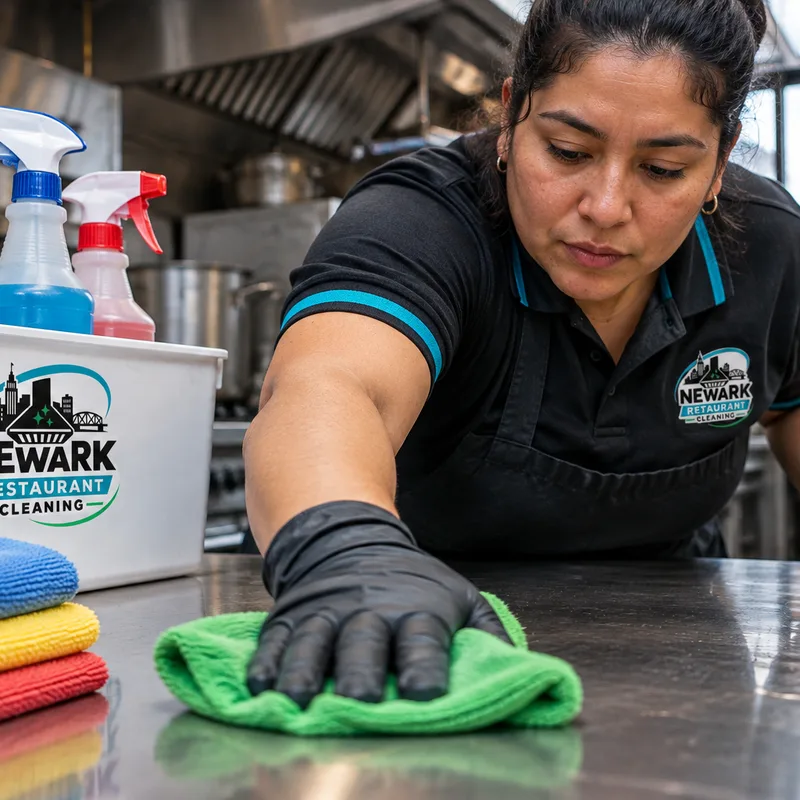
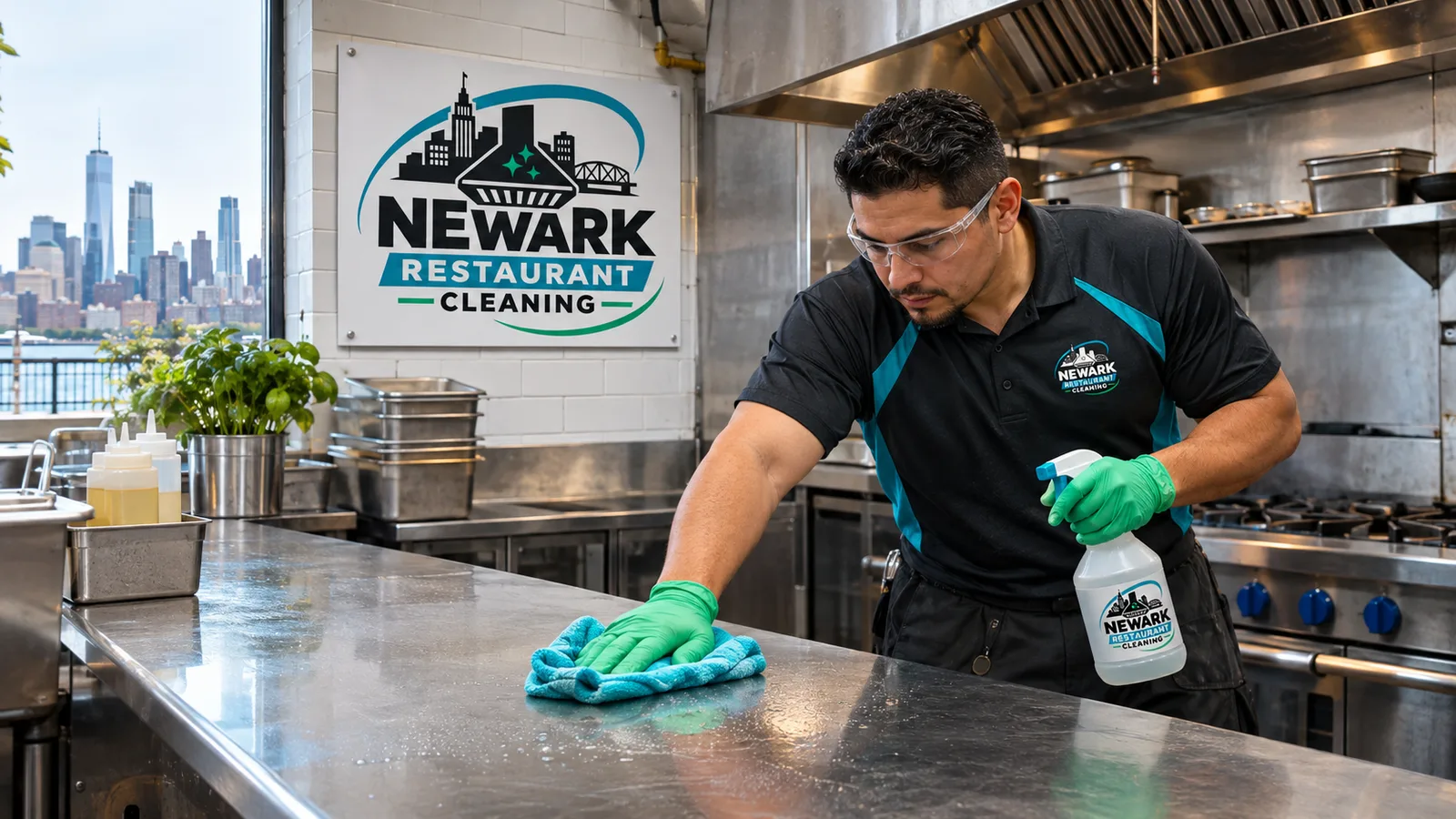
A professional cleaner sanitizing stainless steel food preparation surfaces in a well-maintained Jersey City restaurant kitchen

Restaurant-Specific Scope

Dependable Restaurant Cleaning Without Disrupting Service

Restaurant Cleaning Services Jersey City should support daily operations rather than get in their way. Newark Restaurant Cleaning builds each scope around the facility, service schedule, soil load, and areas that need attention. Work may be scheduled after closing, before opening, or during another agreed low-activity period.

Our team separates food-contact surfaces from floors, restrooms, dining areas, and waste-handling zones. That distinction matters because each area calls for different chemicals, tools, and procedures. Food-contact surfaces require cleaning followed by sanitizing with an appropriate product used according to its label. Degreasers are suited to oily buildup, while restroom tools should remain segregated to reduce cross-contamination.

Working as Newark's local restaurant service, we coordinate with Jersey City operators who need clear responsibilities and repeatable visits. Before work begins, we discuss access, alarm procedures, sensitive equipment, priority areas, and who will confirm completion.

Cleaning Coverage

What Restaurant Cleaning in Jersey City Can Cover

Commercial Kitchen Cleaning

Cleaning may include prep tables, sinks, equipment exteriors, backsplash areas, shelving, wall surfaces, and accessible spaces beneath movable items. Heavy grease or neglected buildup is identified during the walkthrough so the scope is realistic.

Dining and Guest Areas

Tables, chairs, booths, ledges, partitions, doors, and other touchpoints receive attention based on use. Hard floors can be vacuumed or swept and then damp mopped with products appropriate for the floor material.

Restrooms

Fixtures, partitions, dispensers, mirrors, floors, and high-touch points are cleaned with dedicated restroom tools. Consumable restocking can be included when supplies are provided and added to the written scope.

Entry and Service Zones

Entrances, host stations, pickup counters, beverage stations, and corridors collect fingerprints, crumbs, spills, and tracked-in soil. A recurring plan keeps these visible areas ready for opening.

Back-of-House Areas

Storage rooms, employee areas, dishwashing zones, and accessible waste staging areas can be assigned their own frequencies. Tools and chemicals are selected for the actual surface and soil type.

Deep Cleaning Tasks

Periodic work can address baseboards, floor edges, reachable vents, buildup behind movable equipment, and detailed surface cleaning. These tasks are scheduled separately when they exceed routine maintenance.

Facility-Specific Planning

A Cleaning Plan Matched to the Restaurant

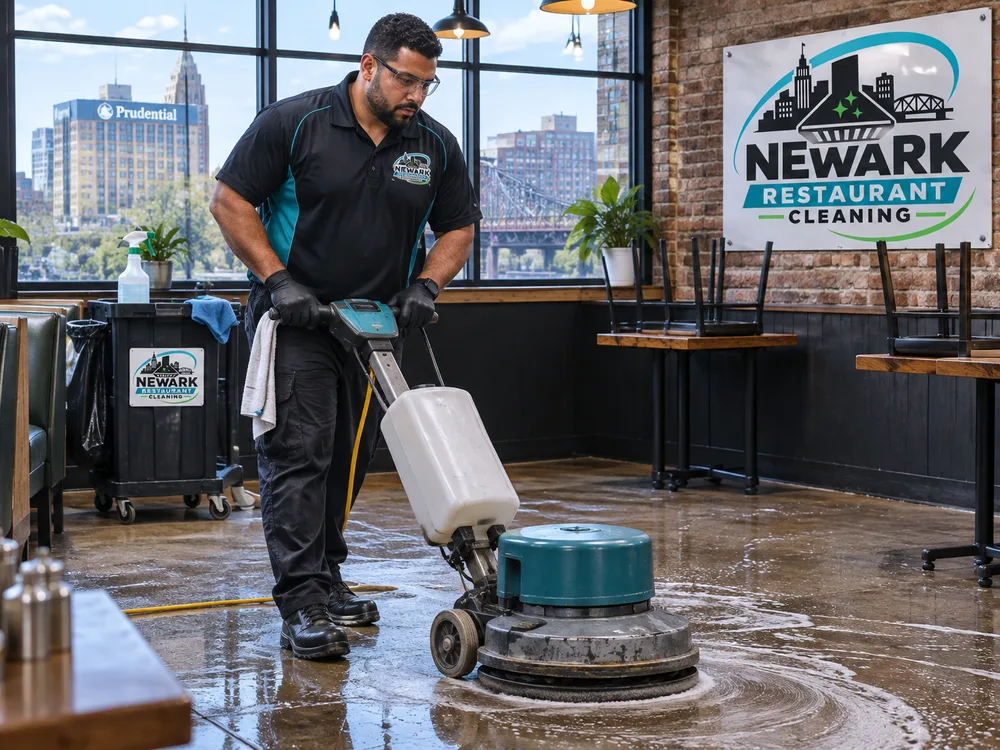
A restaurant cleaning professional using a floor machine on a hard dining-room floor after service, with tables safely moved aside

A counter-service shop has different needs than a full-service dining room or high-volume commercial kitchen. The first walkthrough identifies floor materials, equipment placement, food-contact zones, grease-prone surfaces, restroom traffic, and access constraints. The resulting checklist states what is included, how often it is handled, and which tasks need periodic attention.

Location also affects scheduling. Restaurants near the Grove Street and Newport PATH stations often work around commuter traffic, deliveries, and late operating hours. Newark Avenue businesses may need service timed around evening dining activity and limited curb access. In Journal Square, dense commercial activity and transit traffic can increase tracked-in soil at entrances. Waterfront properties may have large glass areas and polished guest-facing finishes that show fingerprints quickly. These details affect crew timing and task priority, not merely the address.

Warm, humid summer weather can make kitchen grease and odors harder to manage, while winter salt and slush require more frequent entrance and floor care. A practical schedule changes with those conditions instead of treating every visit identically.

Cleaning Process

How Our Cleaning Process Works

  1. 01

    Walk Through the Facility

    We review the kitchen, dining room, restrooms, storage and service areas, entrances, and any restricted spaces. We also note operating hours, access instructions, floor types, sensitive finishes, and equipment that staff must move or shut down.

  2. 02

    Define the Scope and Frequency

    You receive a task-based plan for routine cleaning and periodic deep work. The scope separates included surfaces, excluded work, visit frequency, supply responsibilities, and any areas that require special access.

  3. 03

    Prepare and Clean by Zone

    The crew follows zone-specific procedures and keeps restroom equipment separate from food-service tools. Loose soil is removed before wet cleaning, and products are given the label-directed dilution and contact time.

  4. 04

    Inspect the Work

    Assigned tasks are checked before the crew leaves. Any access issue, damaged surface, unusual buildup, or task that could not be completed safely is reported rather than concealed.

  5. 05

    Adjust When Operations Change

    Menus, hours, seating arrangements, and seasonal traffic change. The cleaning checklist can be revised when a new soil pattern or operating schedule makes the existing plan less effective.

Restaurant-Specific Methods

Why Professional Restaurant Cleaning Requires Specific Methods

Restaurant cleaning is different from general office janitorial work. Protein residue, cooking oils, carbonized deposits, tracked-in soil, and restroom contamination require distinct methods. Applying disinfectant over grease or crumbs does not produce a properly prepared surface. Visible soil must be removed first, and chemicals must be compatible with the surface and used for their labeled purpose.

Color-coded microfiber cloths, dedicated mop equipment, clean-to-dirty work patterns, and separate restroom tools help control cross-contamination. Safety Data Sheets should be available for workplace chemicals, and products should never be mixed unless their labels specifically permit it. Wet-floor controls are also necessary when crews work near employees, delivery staff, or closing managers.

Professional cleaning supports sanitation efforts, but it does not replace the restaurant's food-safety program. Staff remain responsible for safe food handling, equipment procedures, temperature controls, pest management, and any tasks assigned by management or required by health authorities. Cleaning crews should also avoid inaccessible internal equipment components unless those items are specifically prepared and included in the scope.
Jersey City Pricing Factors

How Much Do Restaurant Cleaning Services Cost in Jersey City?

Recurring restaurant cleaning in Jersey City typically costs about $0.12 to $0.35 per square foot per visit, while a detailed one-time deep clean may run about $0.30 to $0.75 per square foot. Minimum visit charges can apply to smaller locations.

Final pricing depends on kitchen grease levels, square footage, visit frequency, restrooms, floor-care needs, equipment access, operating hours, and whether the restaurant supplies consumables. Hood exhaust cleaning and pest control are separate specialized services. Exact cost is confirmed after a facility walkthrough and written scope.

Restaurant Details

Details That Shape a Guest-Ready Restaurant

Close view of a cleaner wiping a stainless steel preparation table with color-coded microfiber cloths and labeled cleaning supplies nearby
Tools are separated by cleaning zone to help control cross-contamination.
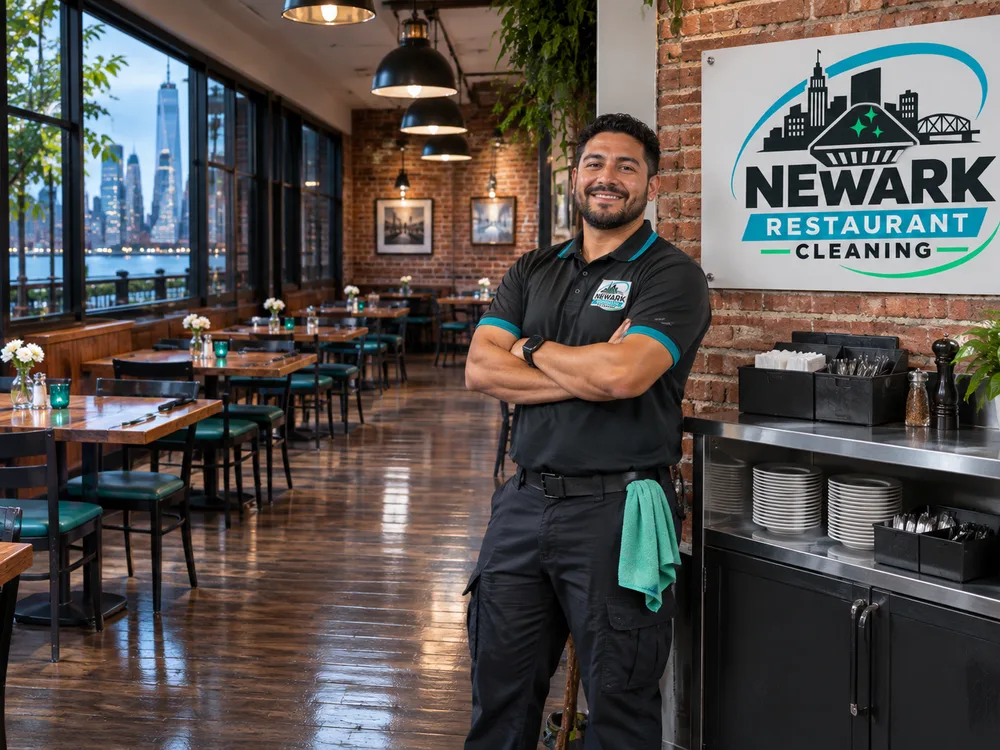
A clean Jersey City restaurant dining room after closing, showing spotless hard floors, wiped tables, and an orderly service station
Dining areas are prepared around the restaurant's opening and closing schedule.
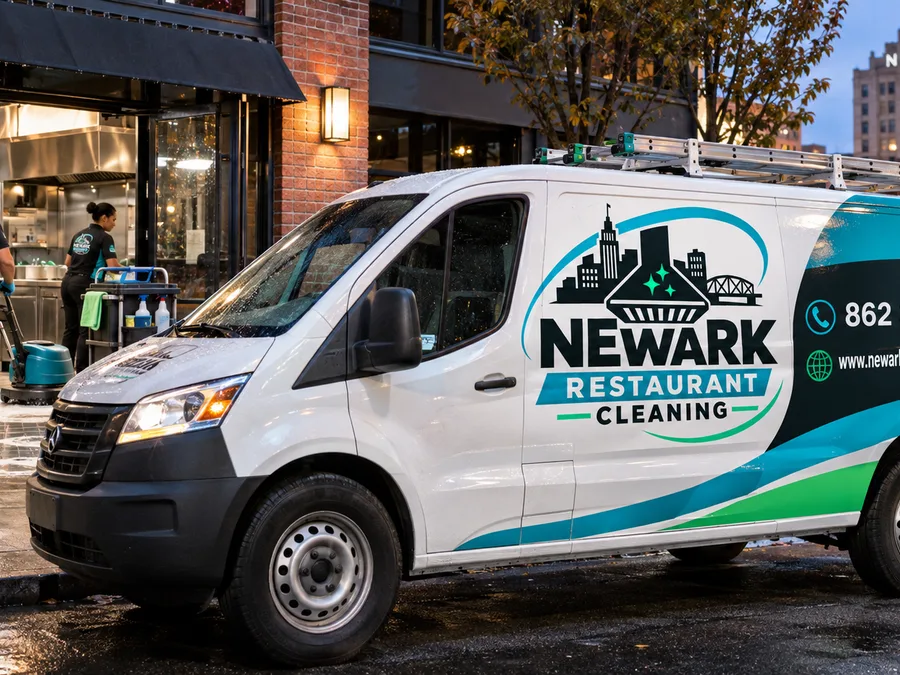
A commercial cleaning crew unloading floor-care tools outside a Jersey City restaurant during an agreed low-traffic service window
Scheduling accounts for access, deliveries, and neighborhood traffic.
A facility walkthrough turns broad expectations into a written checklist, practical frequency, and schedule that fits your operation.

Practical Questions

Restaurant Cleaning Jersey City: Common Questions

Can restaurant cleaning be scheduled after closing in Jersey City?

Yes, cleaning can usually be planned after closing, before opening, or during another agreed low-activity window. Restaurants near Grove Street, Newport, and Journal Square often need timing that accounts for PATH traffic, deliveries, staff departure, and building access. Alarm instructions and key or manager access should be settled before the first visit.

How often should a restaurant be professionally cleaned?

The right frequency depends on volume, menu, hours, floor type, and the restaurant's internal closing routine. Busy kitchens and restrooms may need service several times per week or daily, while detailed edge work and cleaning behind movable equipment can follow a periodic schedule. The walkthrough determines which tasks belong on each visit.

Does the service include kitchen hood and exhaust-system cleaning?

Hood, duct, and exhaust-system cleaning should be treated as specialized work and is not assumed to be part of standard restaurant cleaning. Routine service may cover accessible exterior surfaces if listed in the scope, but internal grease-exhaust components require suitable access, methods, and documentation. Confirm that responsibility separately before approving a proposal.

Will professional cleaning prepare my restaurant for a health inspection?

Professional cleaning can improve facility cleanliness, but it cannot guarantee an inspection result. Jersey City restaurants are subject to applicable state and local food-safety requirements, and inspection outcomes also depend on food handling, temperatures, storage, pest control, employee practices, and equipment condition. Cleaning should support the restaurant's broader sanitation program.

Do we need to move food or equipment before the crew arrives?

Food should be covered or stored, and staff should secure items that may interfere with cleaning. Management should identify equipment that may be safely moved, shut down, or cleaned only by trained restaurant staff. Crews should not disconnect gas, electrical, or fixed commercial equipment merely to reach an area.

What determines the price of Restaurant Cleaning Services Jersey City?

Price is mainly determined by square footage, cleaning frequency, kitchen grease, floor-care requirements, restrooms, access, and the depth of the task list. A compact counter-service location with a strong nightly routine differs from a full-service kitchen requiring detailed periodic work. A walkthrough provides the basis for an accurate written quote.

Can you use our restaurant's approved cleaning products?

Customer-supplied products may be used when they are suitable for the task, properly labeled, and included in the agreement. The crew needs access to label directions and Safety Data Sheets, and the product must be compatible with each surface. Management should identify any manufacturer-required products for specialty flooring, stone, or equipment finishes.

Set Up a Cleaner, More Consistent Restaurant

Tell Newark Restaurant Cleaning about your facility, operating hours, and current problem areas. We will help define the tasks, frequency, and access plan needed for a clear restaurant cleaning proposal.

Talk With Our Team

Plan a Cleaner Restaurant

Tell us about your space, schedule, and cleaning priorities. We will help define a practical scope for your restaurant.

Request a Quote

Request Restaurant Cleaning Service

After you submit the form, our team will review your details and contact you to discuss the property and next steps.